

How to Get Kids to Dress Themselves
Teaching kids how to get dressed independently is harder than it seems. It requires fine motor skills and focus, all while they're more interested in literally anything else. Bestseller outfit or not, those buttons, zippers, and inside-out pants cause the inevitable meltdowns that force you to just do it for them.
But learning to dress themselves is an important step toward independence, and with patience, time, and these practical tips, you can even make this process enjoyable for your kid.
Why Kids Need to Learn Dressing Skills
When children learn to handle their own clothes, it gives them a sense of independence and confidence, but it also helps with other areas of development.
For example:
- Learning to fasten buttons or tie shoes helps develop fine motor skills.
- Naming clothing and different body parts during the dressing process helps improve language skills.
- Getting dressed involves a lot of critical thinking and problem-solving, which is essential for cognitive development.
- When the child can pick out their outfit and style, it promotes self-expression and creativity.
How to Teach Your Kids Dressing Skills
To us, getting dressed takes almost no thought at all; it's an automatic process that we just "do."
For a child, though, it can seem like a monumental task (and a boring one at that). Therefore, your job is to break it down and make it interesting. Here's how.
Give yourself plenty of time (and patience)
The younger the child is, the more patience and time you need. So, don't start the learning process when you're rushing out the door in the morning.
Instead, practice dressing during a calm time. Before bed or during the weekend are ideal times to get started.
Remember to stay calm yourself. Don't get frustrated that your child is taking a long time or getting it wrong. It's all part of the process.
Pro tip: Start teaching your child to get dressed in the summer. T-shirts and shorts are faster and easier to put on compared to kids' winter clothes.
Learn to get undressed first
It might sound counterintuitive, but teach your toddler to get undressed first. It's easier to take clothes off than it is to put them on.
In fact, toddlers are notorious for removing their clothes anyway, so help them master this skill first.
Begin small and simple
Don't begin with a buttoned shirt or pants. These can come later when your child has figured out the basics.
Start with simple clothing, such as:
- Underwear and socks
- Shoes with Velcro fastenings or slip-ons
- Pants with elastic waistbands
- Loose, stretchy items like cotton clothing (nothing tight or stiff)
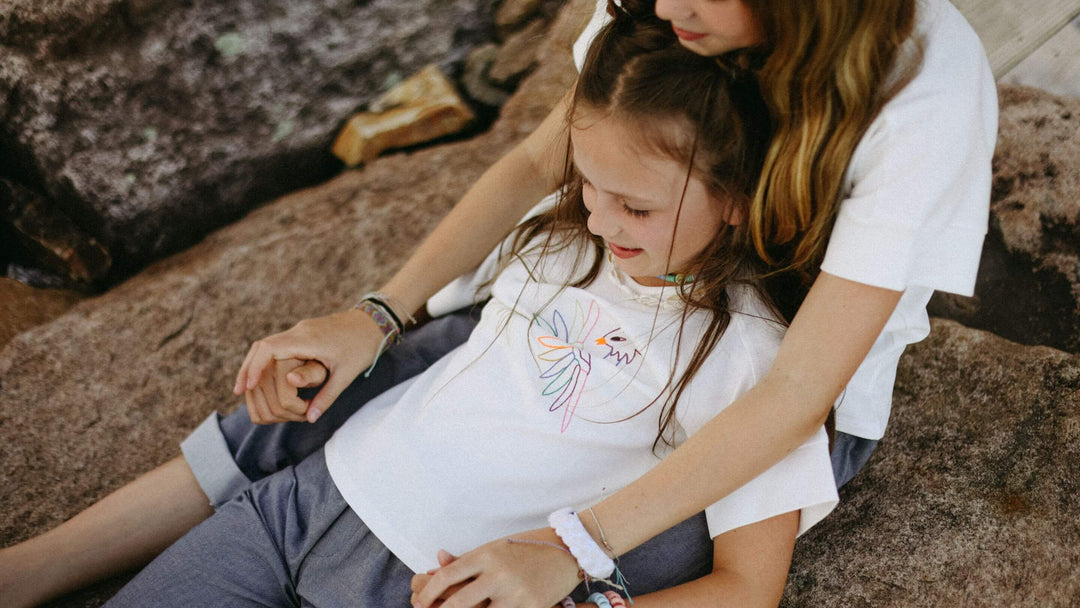
- Shirts with designs on the front so your child can tell which is the front and back
Teach the steps backwards
To make the process easier, try breaking each task down into steps and teaching your child the last one first.
For example, when putting on a t-shirt, face it the right way and place their head through the top. Then, ask them to do the last step, which is putting their arms through the sleeves.
For pants, begin by placing their legs through the leg holes and ask the child to pull the waistband up over their bottom. Then progress to placing one leg in a leg hole and asking them to place the second.
Let them mirror you
Visual cues are a great way to support learning, so why not get dressed together?
Gather similar clothing and get dressed slowly, letting your child copy your actions.
Narrate and explain each step as you go. For example, you could say, "First, I'm going to pull the shirt over my head, now you try. Next, I'm slipping my hands through the sleeves. It's your turn now."
Children love to mimic grown-ups, and turning it into a shared daily routine will help your child learn in a fun and relaxed manner.
Set their clothes up the right way
One area that children have trouble with is putting on clothes the right way around.
Therefore, it helps to lay out their clothes the correct way, so all they have to do is pick up each item and put it on.
Here's how to do it:
- Lay pants and underwear facing up
- Place the socks so the heel part is facing down
- T-shirts and sweaters should be placed facing down
Teach alternate positions
Some children, especially toddlers, find it difficult to keep steady when putting on clothes. Balancing on one leg to put on pants is tricky, and it's easy for them to get disoriented when pulling something over their head.
In this case, give them extra support while they're grappling with the clothes. You can also show them alternative positions.
For example, it's much easier to sit and pull pants up the legs and over the feet, before standing to pull them over the bottom.
Provide a small choice
Part of learning to get dressed is giving children autonomy over their outfits.
As such, we're big fans of the kids' capsule wardrobe because too much choice is overwhelming for small children. It either makes them indecisive, or they want to wear everything all at once!
Offer a choice of two. Hold up two shirts and ask them to point to the one they want, and do likewise with the rest of the clothes.
This makes the child feel like they're in control of what they put on, making it more likely to dress themselves. Plus, it encourages independence and creativity in their own style.
Make getting dressed fun
If your toddler is especially resistant to dressing themselves, try making it as fun as possible.
Start by playing dress-ups. Your child will be more eager to put on their favorite superhero costume than a cashmere knit.
You could also let them choose what to wear for family photos. If you all dress up together, it will encourage your little one to do likewise.
Be consistent
Consistent practice is key to establishing a routine for getting dressed.
Begin with one or two small dressing tasks and practice them daily. Gradually increase the number of tasks as your child becomes more confident and adept.
Dressing Skills by Age: What’s Typical and What to Teach
Here's a general guide for what toddlers tend to learn and when. Keep in mind that each child learns at a different pace.
It's important to let your kid find their own way, even if it takes extra time compared to their friends.
|
Age |
Skill |
|
One year |
|
|
Two - three years |
|
|
Three - four years |
|
|
Four - five years |
|
|
Five years onwards |
|
FAQs
At what age should a child be able to dress themselves?
Most children start learning simple dressing skills around age two, like pulling up pants with elastic waists. By three or four, many can put on shoes, socks, shirts, and other clothing items with minimal help.
Full independence usually develops from five onwards, though tricky things like zippers, buttons, and shoelaces can take longer.
What to do when a child refuses to get dressed?
When a child refuses to get dressed, it's important to stay calm. Then, try these strategies:
- Offer a choice of clothing, especially their favorite items.
- Make it a game, like "copy me."
- Use visuals. Picture charts give structure to what to do.
- Create a predictable routine.
- Encourage and don't argue. Give them more support and accept that it will take extra time.
How to help an ADHD child get dressed?
To help ADHD children get dressed, you should factor in plenty of structure and movement. Try these tips:
- Break dressing tasks into tiny steps
- Use a visual checklist that they can tick off
- Prep clothes the night before
- Turn off the TV and make the environment as distraction-free as possible
- Turn the process into a competition or a race
How to teach kids to take their shirt off?
To teach a child to take their shirt off, it's easiest to choose a loose, stretchy item of clothing so it's simple to remove. Then, tell them to pull their arms inside the shirt before lifting it up and over their head.
Final Thoughts
Dressing your toddler doesn’t have to feel like a daily showdown. With the right routines, patience, and strategies, independence comes naturally.
At Firebird Kids, our sustainable fabrics keep little ones comfy while they learn. Explore our new arrivals and find pieces your little one will love putting on every day.


Leave a comment