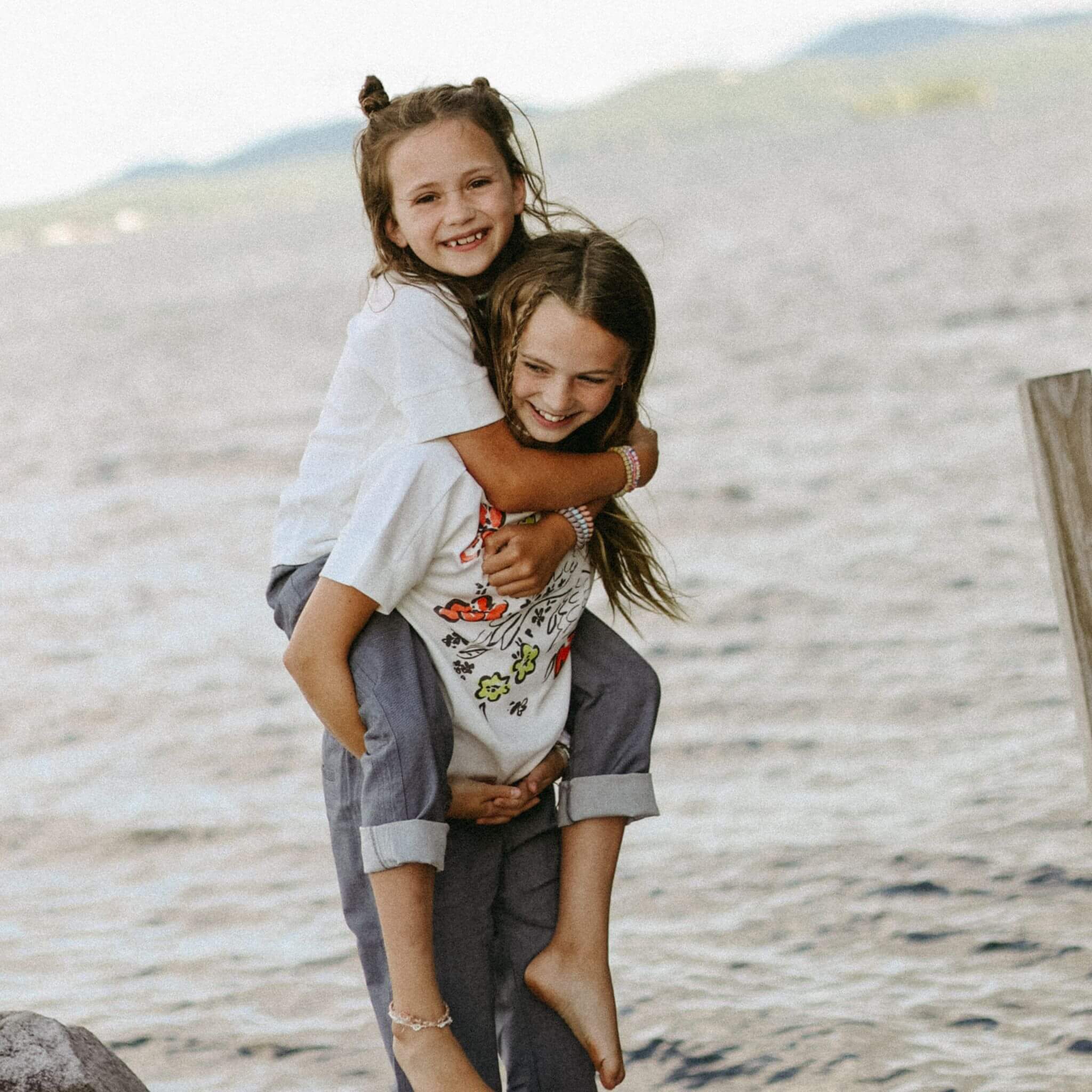
The first wear is always a quiet one. Pulled out of a folded stack on a Sunday morning, the cotton still cool from the drawer, the hem tugged down over a small back. By the end of the day, it's already the shirt of the week.
Tees do most of the work in a kid's wardrobe. They're the layer underneath, the layer on its own, and the layer that ends up in every other photo.
Why Tee Shopping Gets Harder Than It Should
Most kids' tees fall into two camps. There are the cheap ones that turn scratchy after three washes, with collars that stretch out by week two. And there are the precious ones that look beautiful on the hanger but get demoted to "indoor only" the moment they leave the closet.
Neither one survives a real childhood.
A good kids' tee has to handle the chocolate milk, the climbing structure, the wash cycle, and the growth spurt. It has to feel like nothing on sensitive skin, and it has to keep its shape long enough to get passed down or sold on.
What Actually Matters in a Kids T-Shirt
Cotton weight is the easiest thing to overlook and the fastest thing to notice. A thin, papery tee feels okay in the store and sad in the laundry basket. We use GOTS-certified organic Peruvian Pima cotton because it's denser, finer, and longer-staple than the standard stuff, and the difference shows up around wash ten, not wash one.
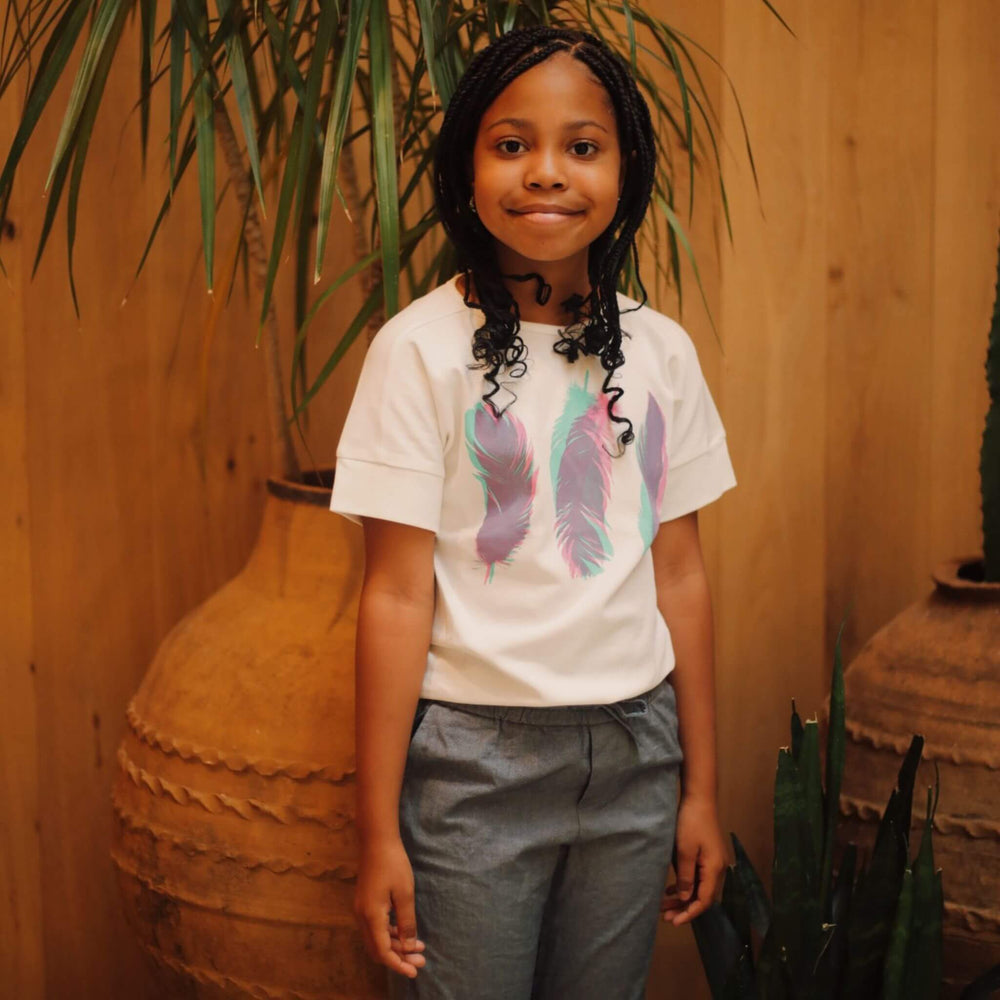
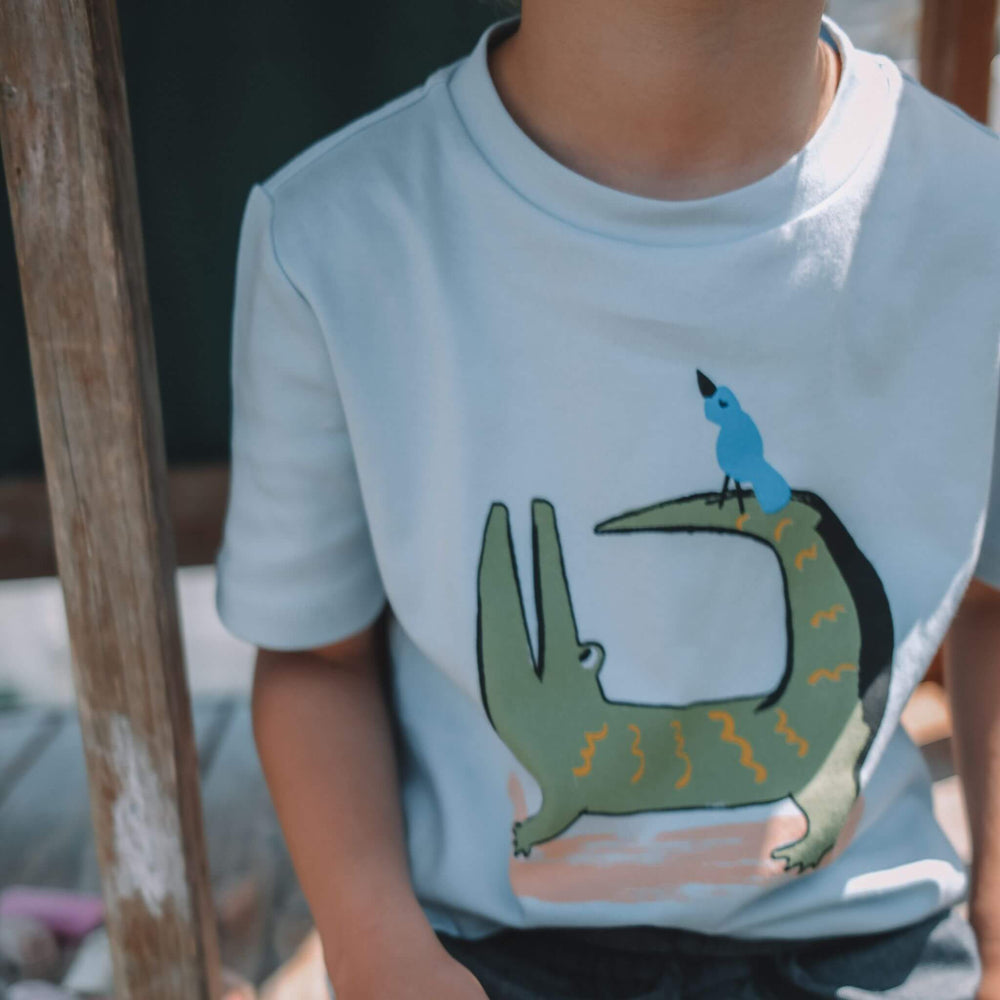
Fit is the other one. Drop shoulders give room to climb. Crewnecks should sit flat, not gape. Sleeves should land where sleeves land, not creep up the forearm by lunch.
The Tees Worth Knowing
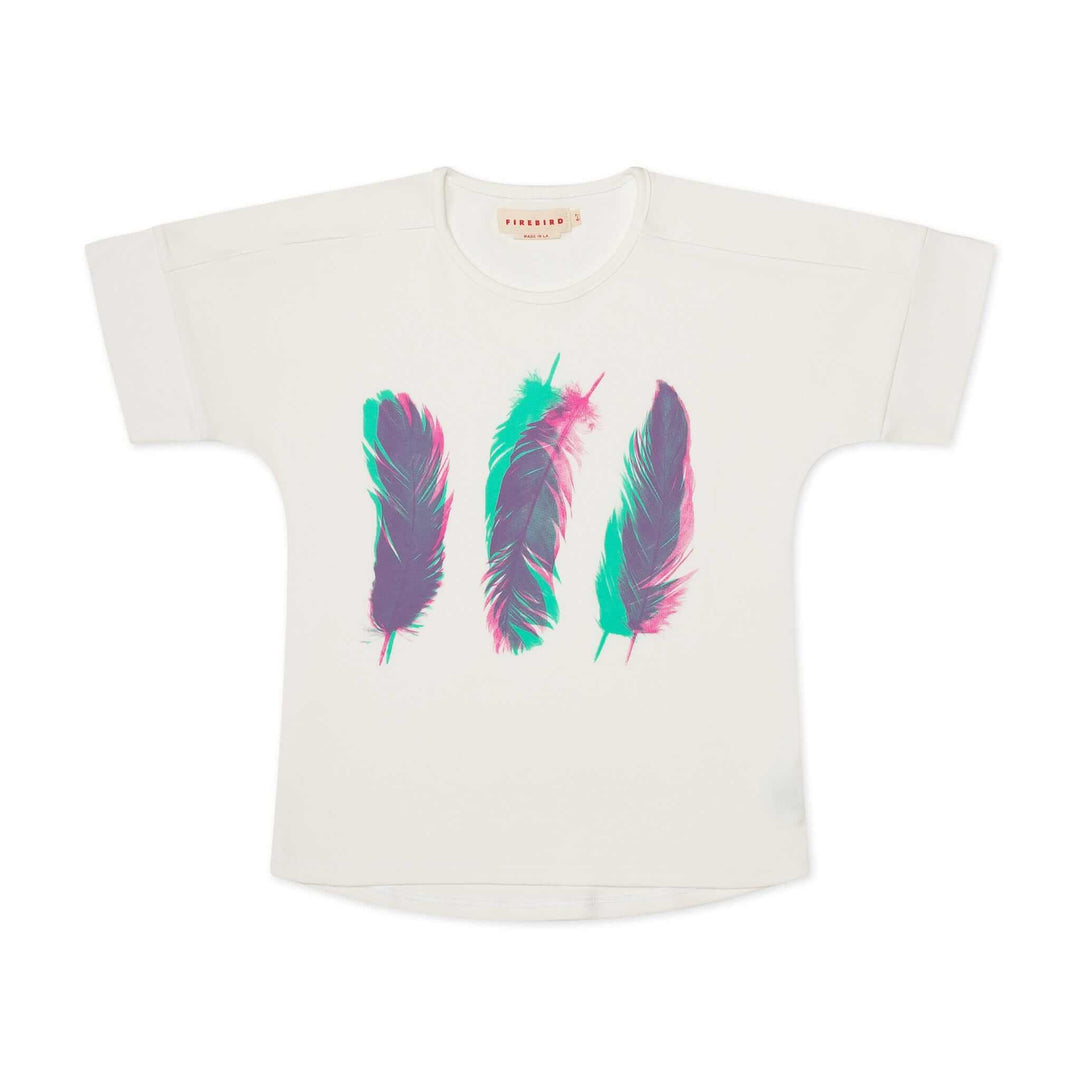
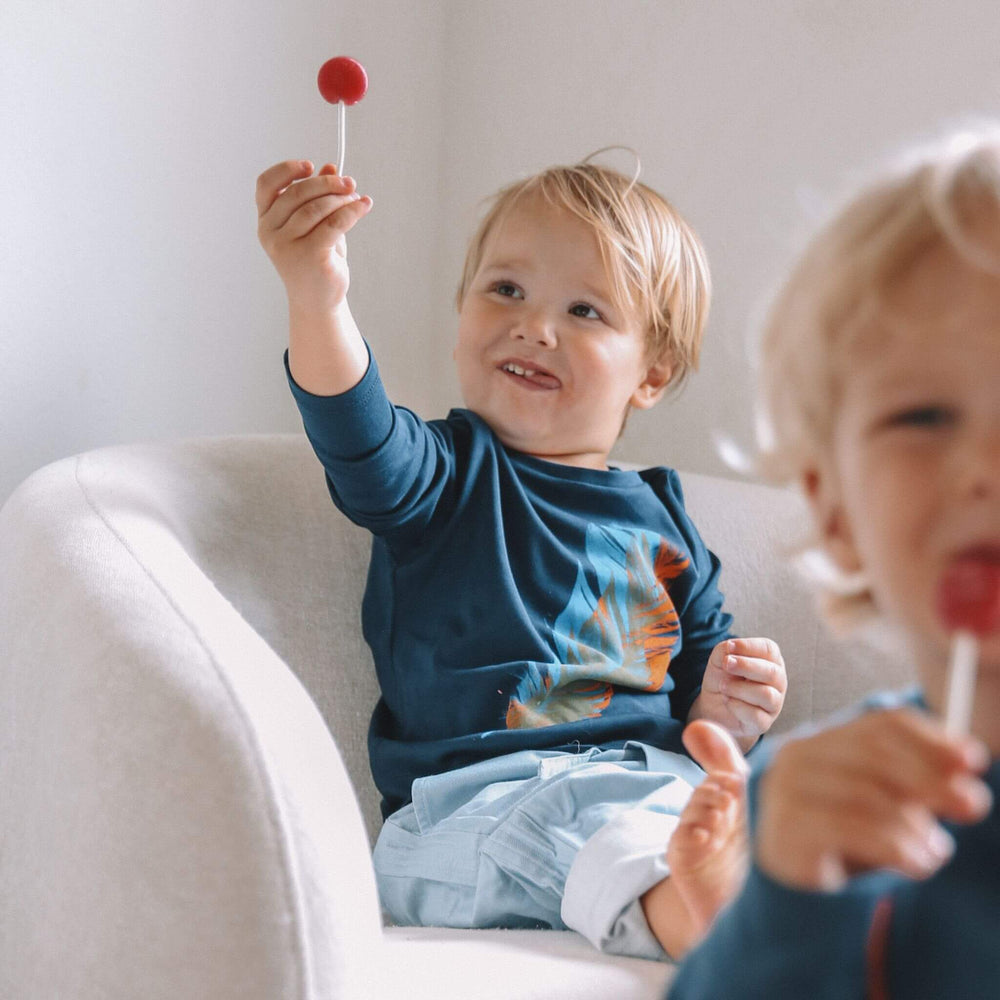
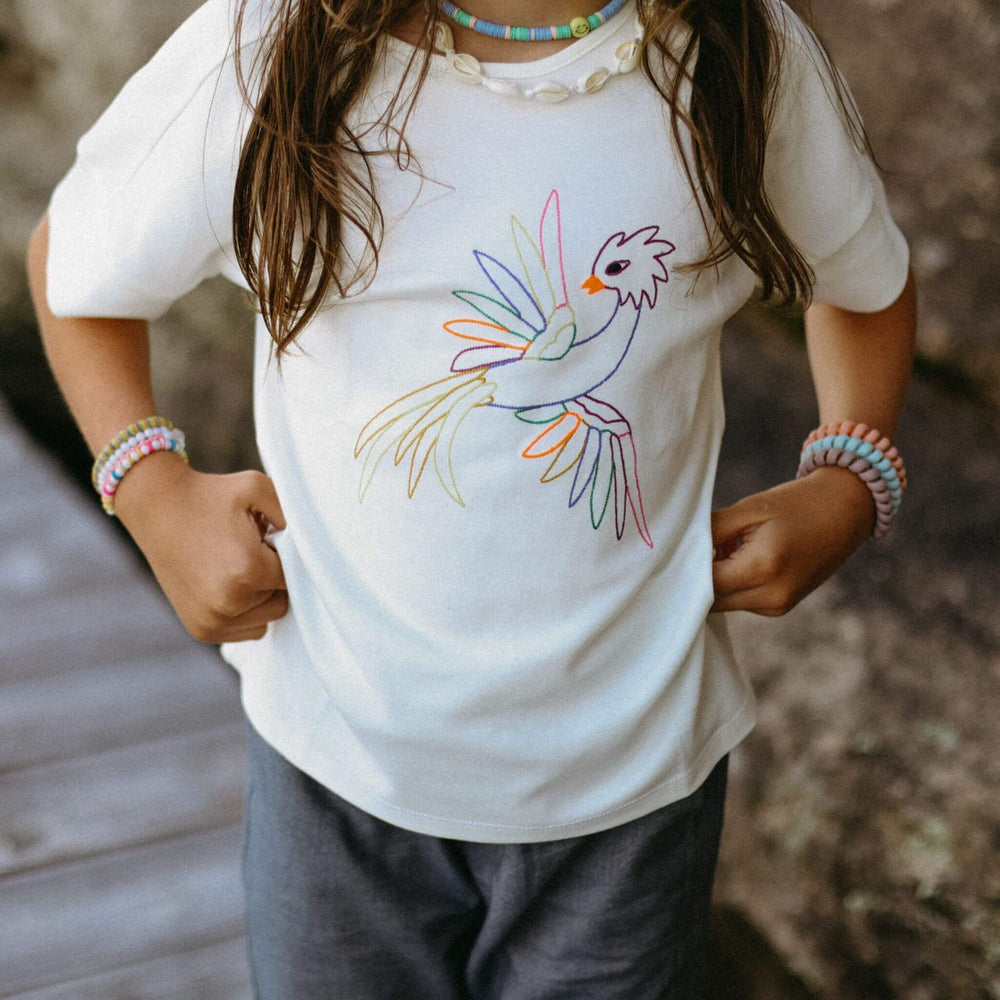
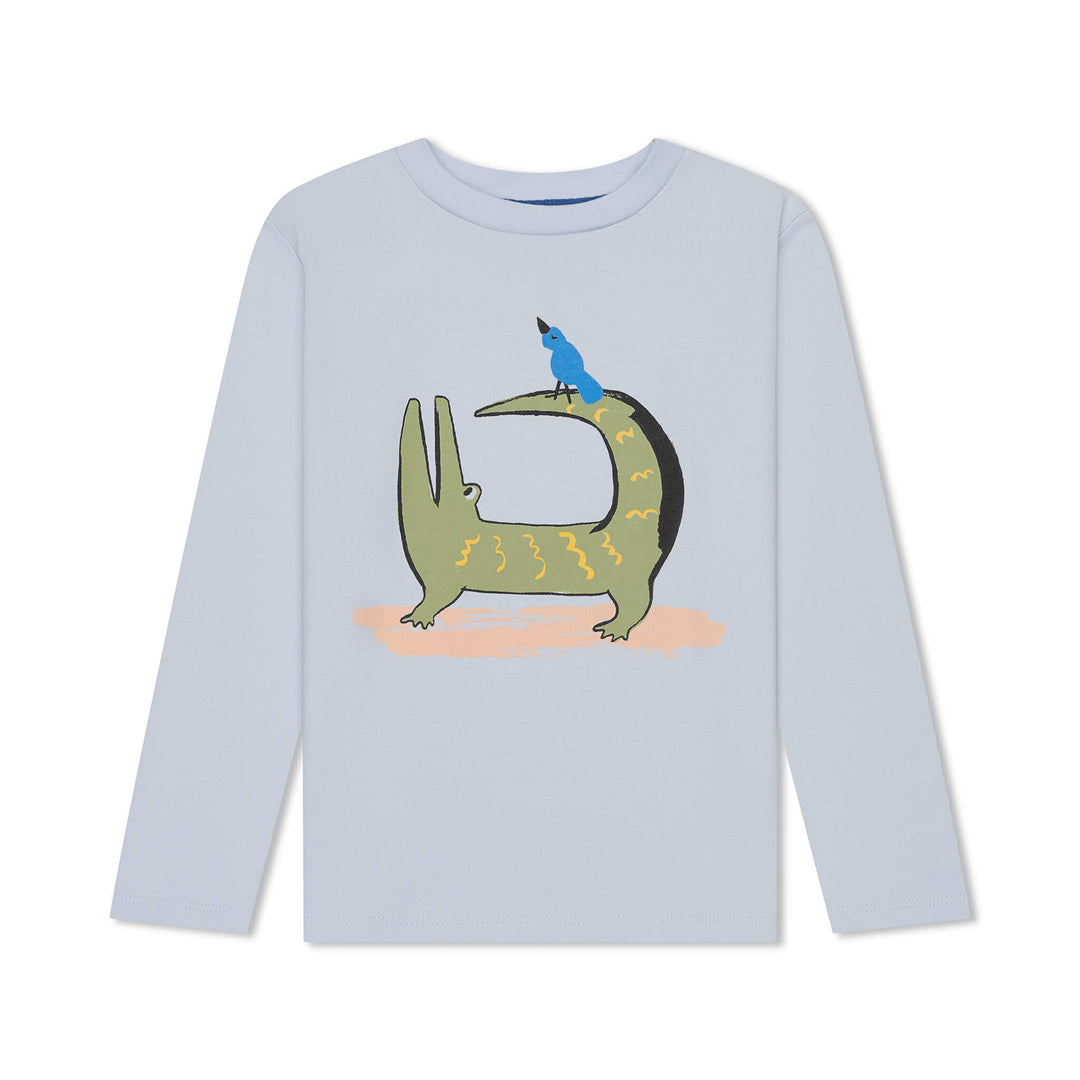
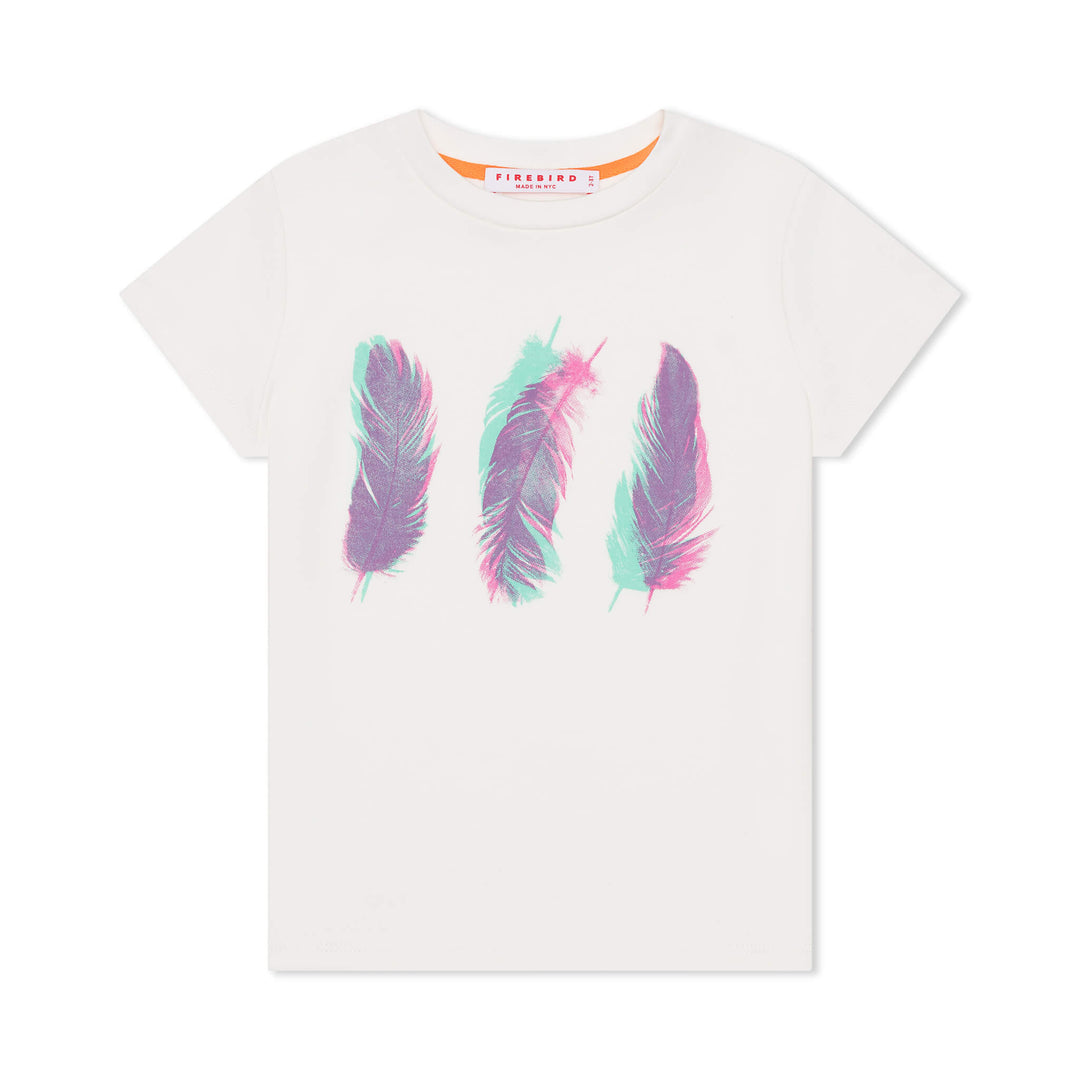
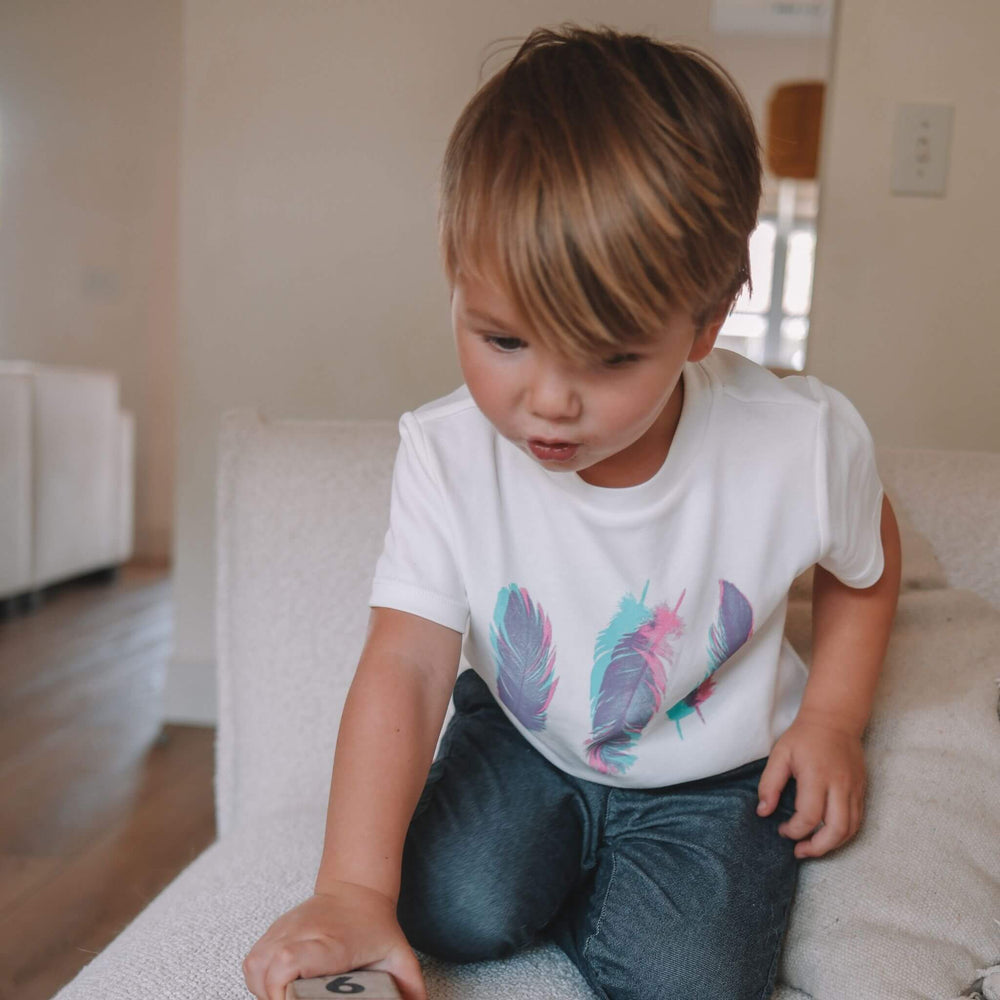
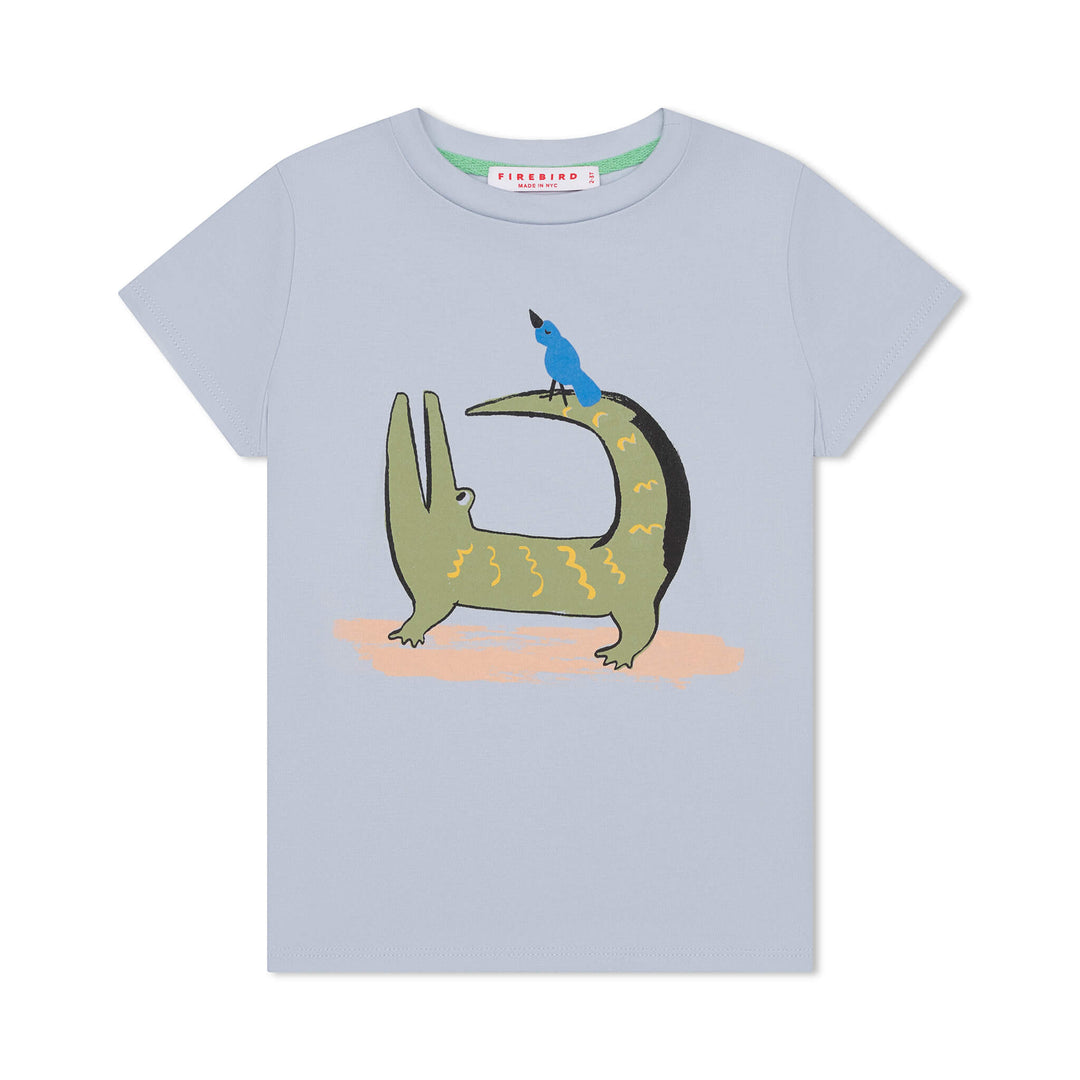
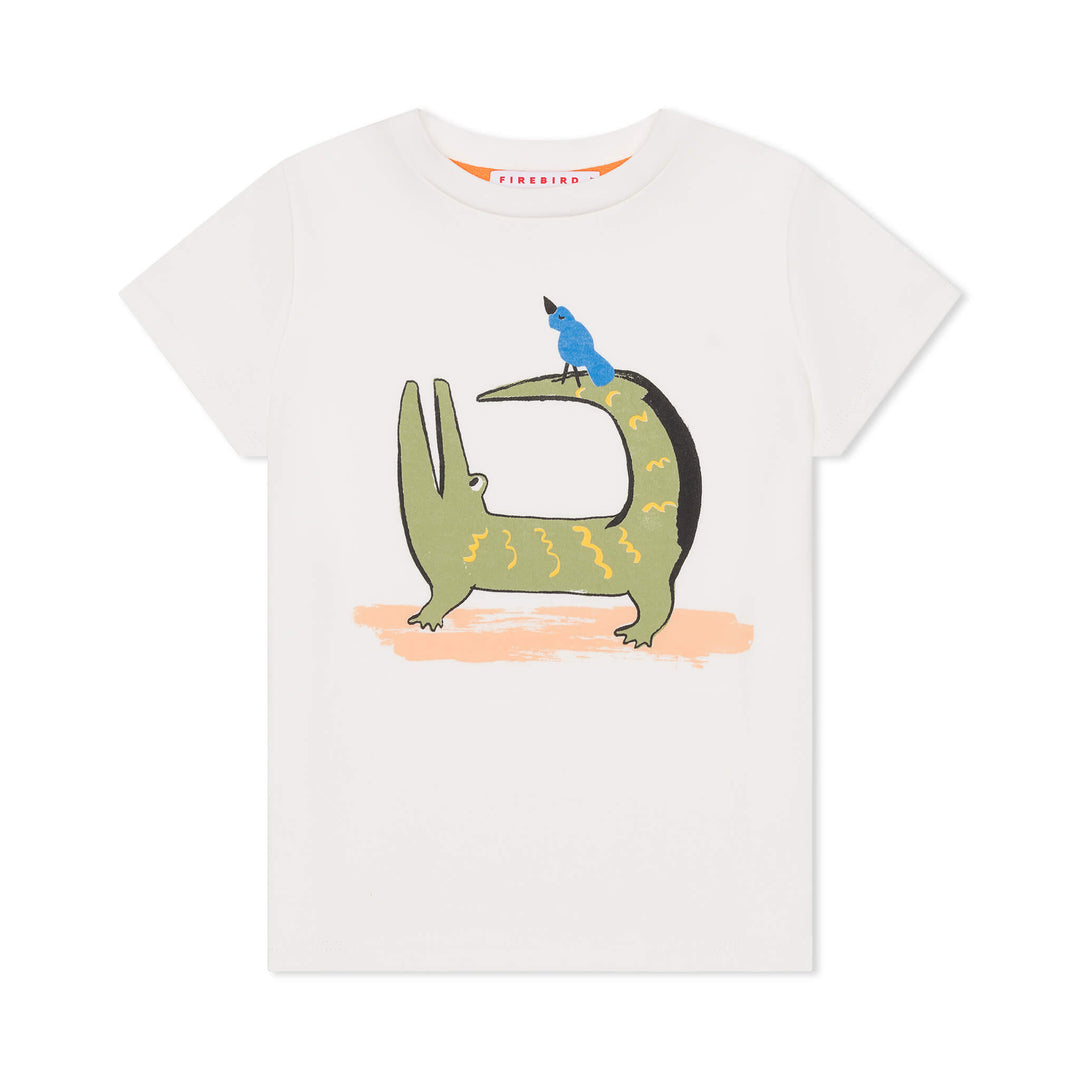
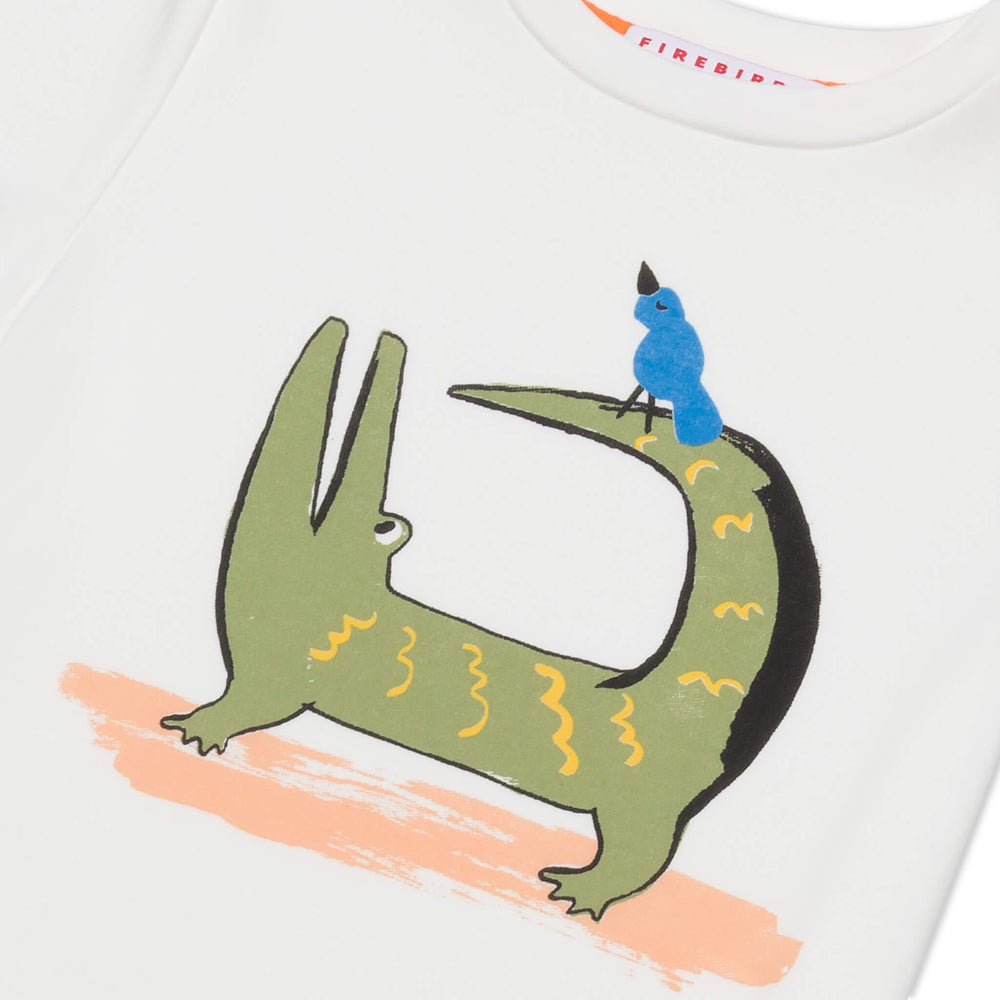
Our most-reordered tee. The graphic is printed soft so it doesn't sit heavy on the chest, and the body has the thicker cotton hand we put on every short sleeve. It pairs with everything in the drawer.
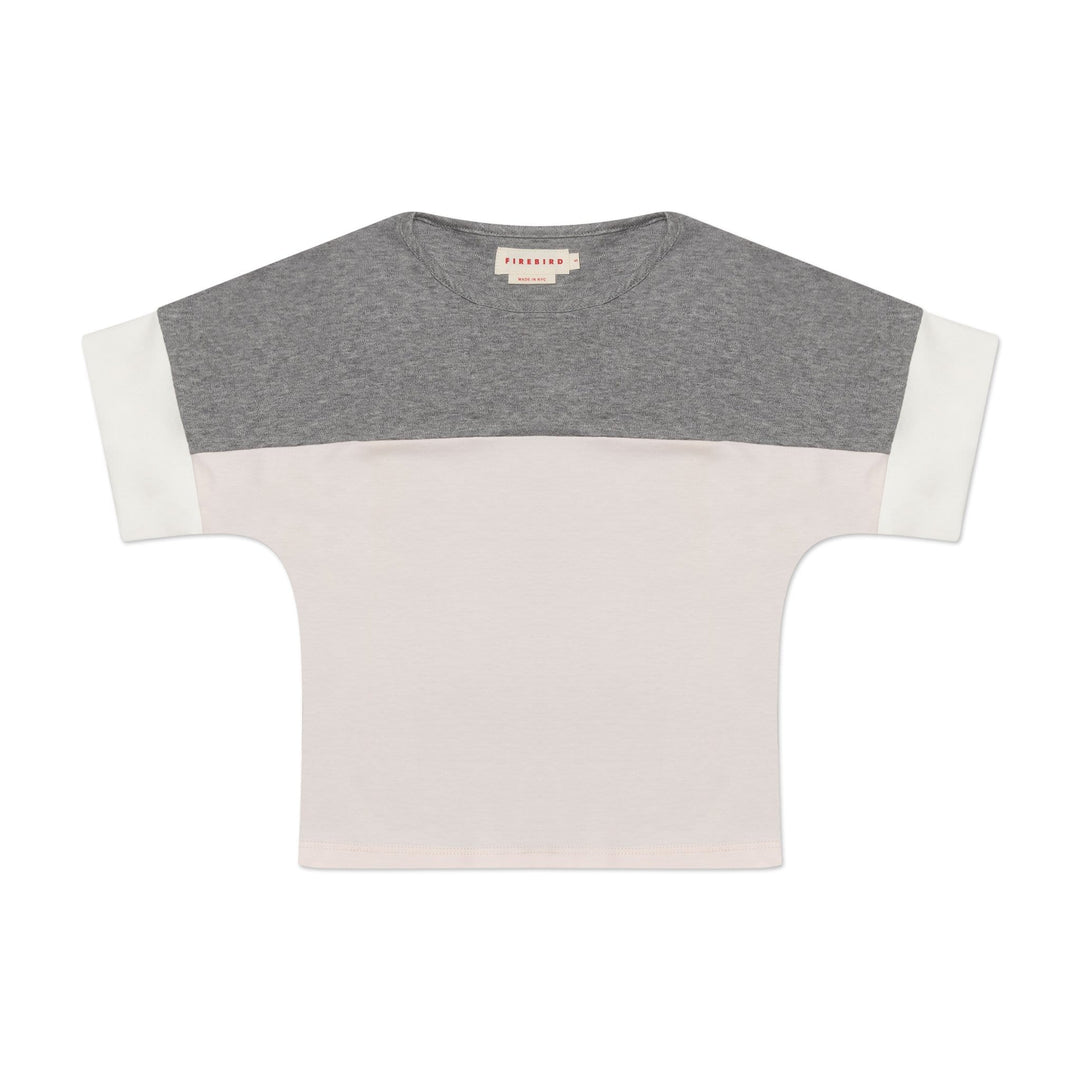
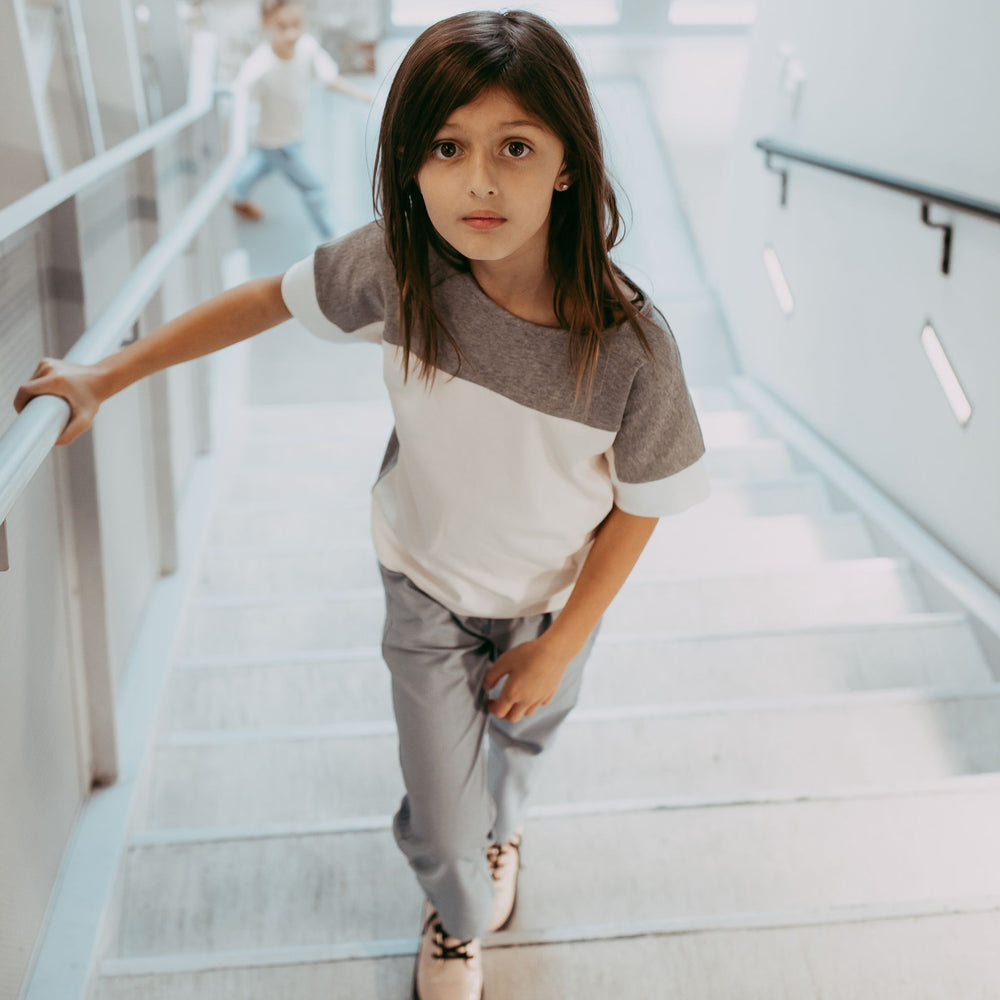
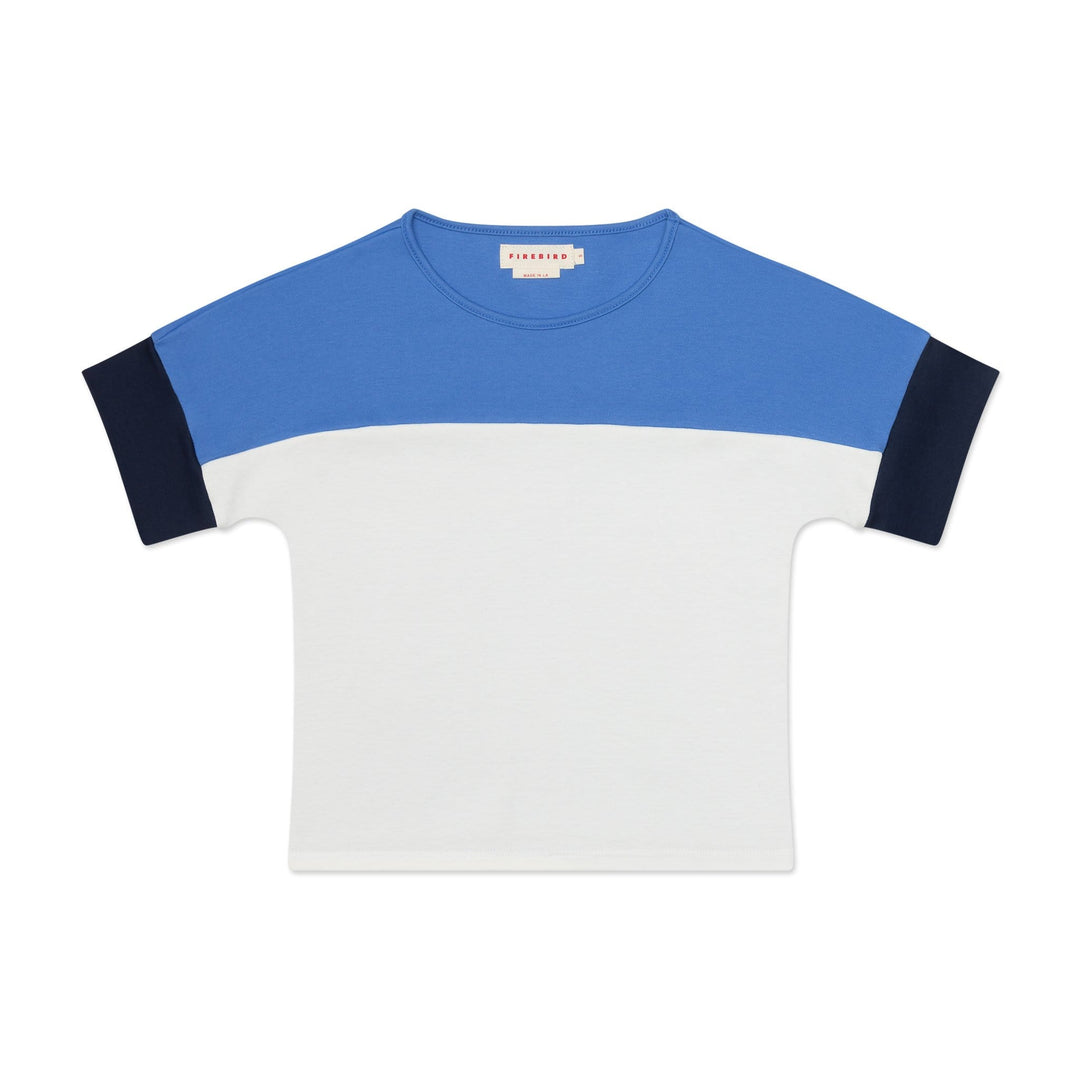
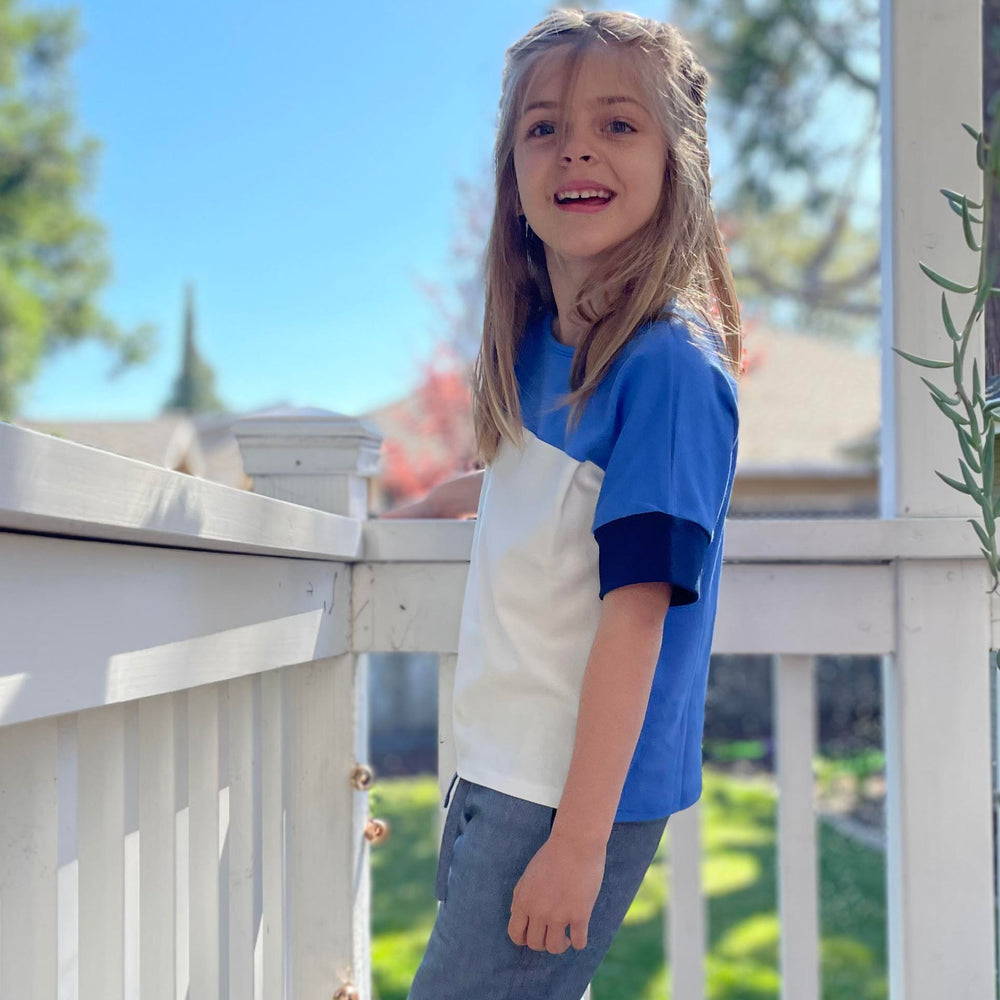
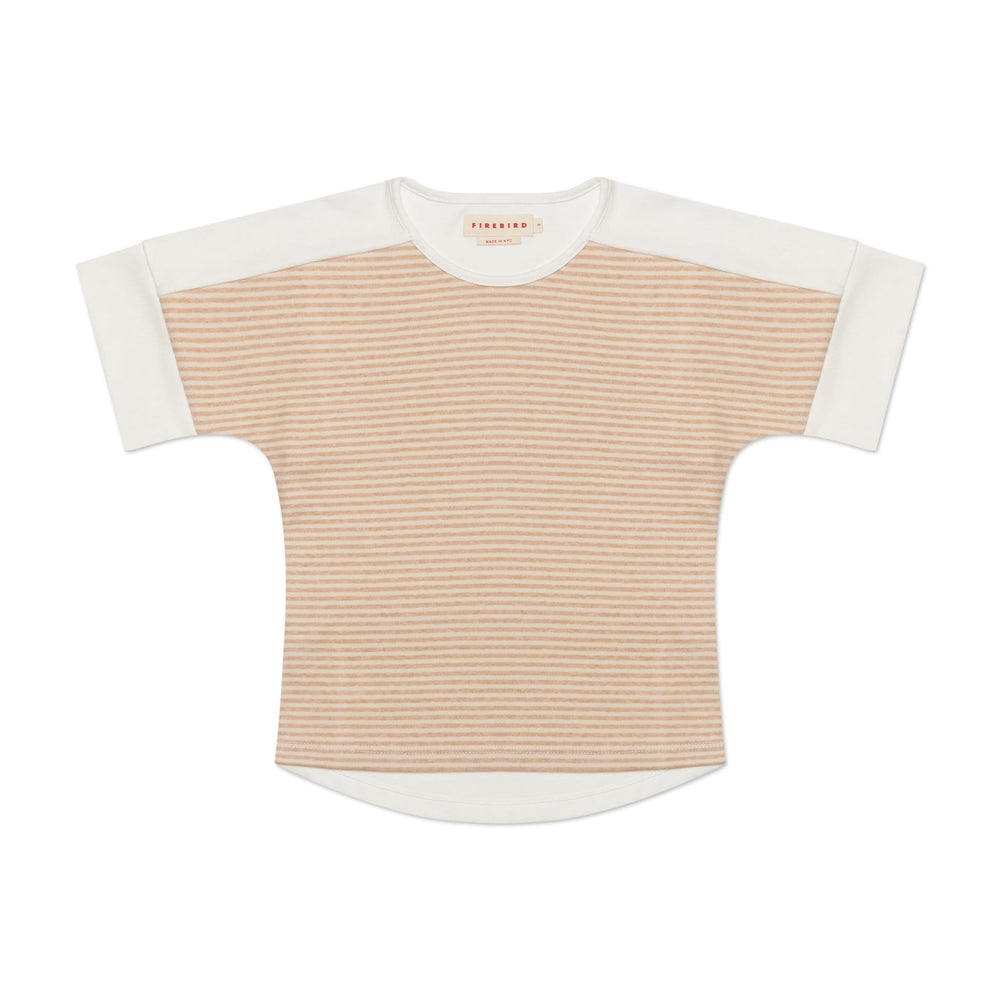
The colorblock is for kids who move. We cut the shoulder dropped on purpose so the sleeve doesn't ride up mid-climb, and the two-tone panels do real work hiding the marks of an actual day. Pink and gray, navy and white. Heavier cotton, holds its shape.
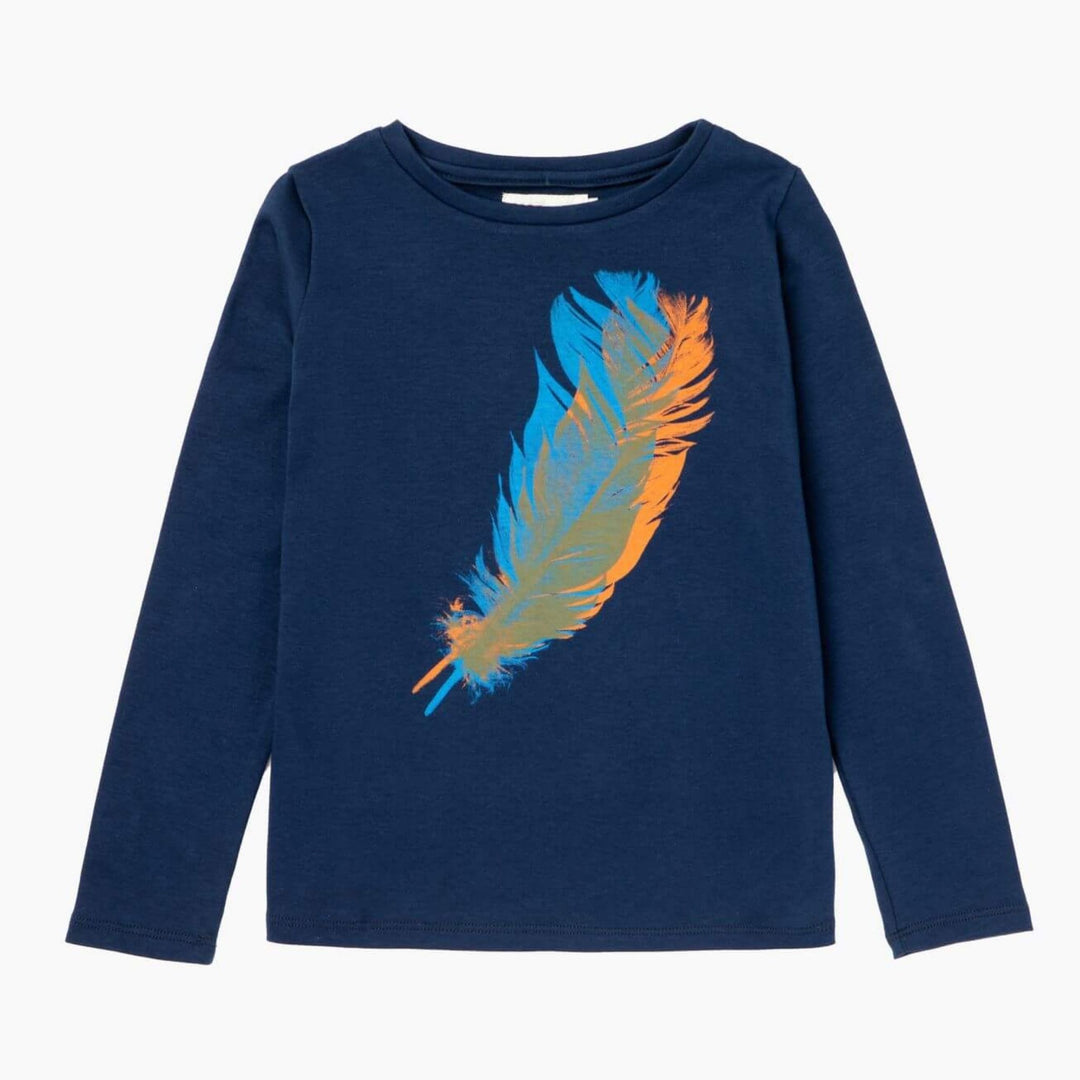
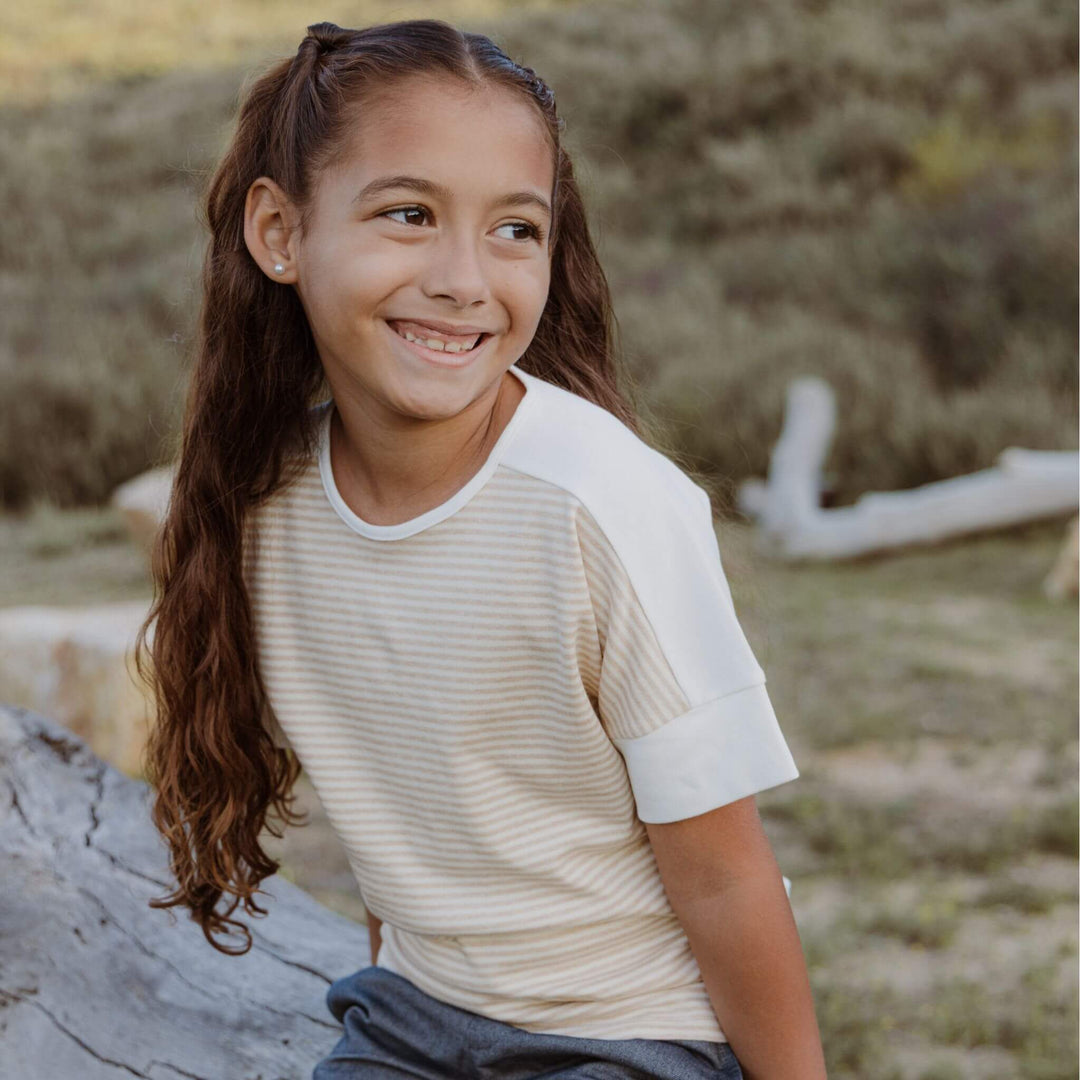
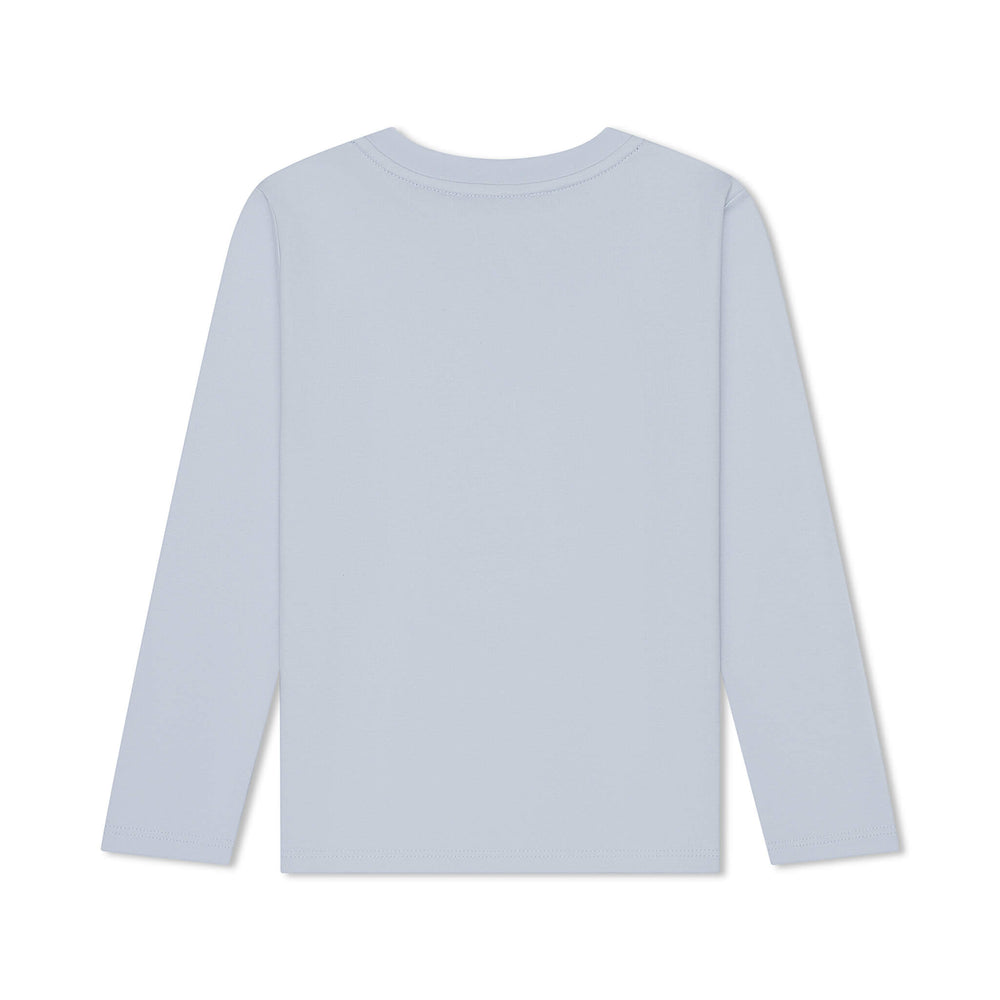
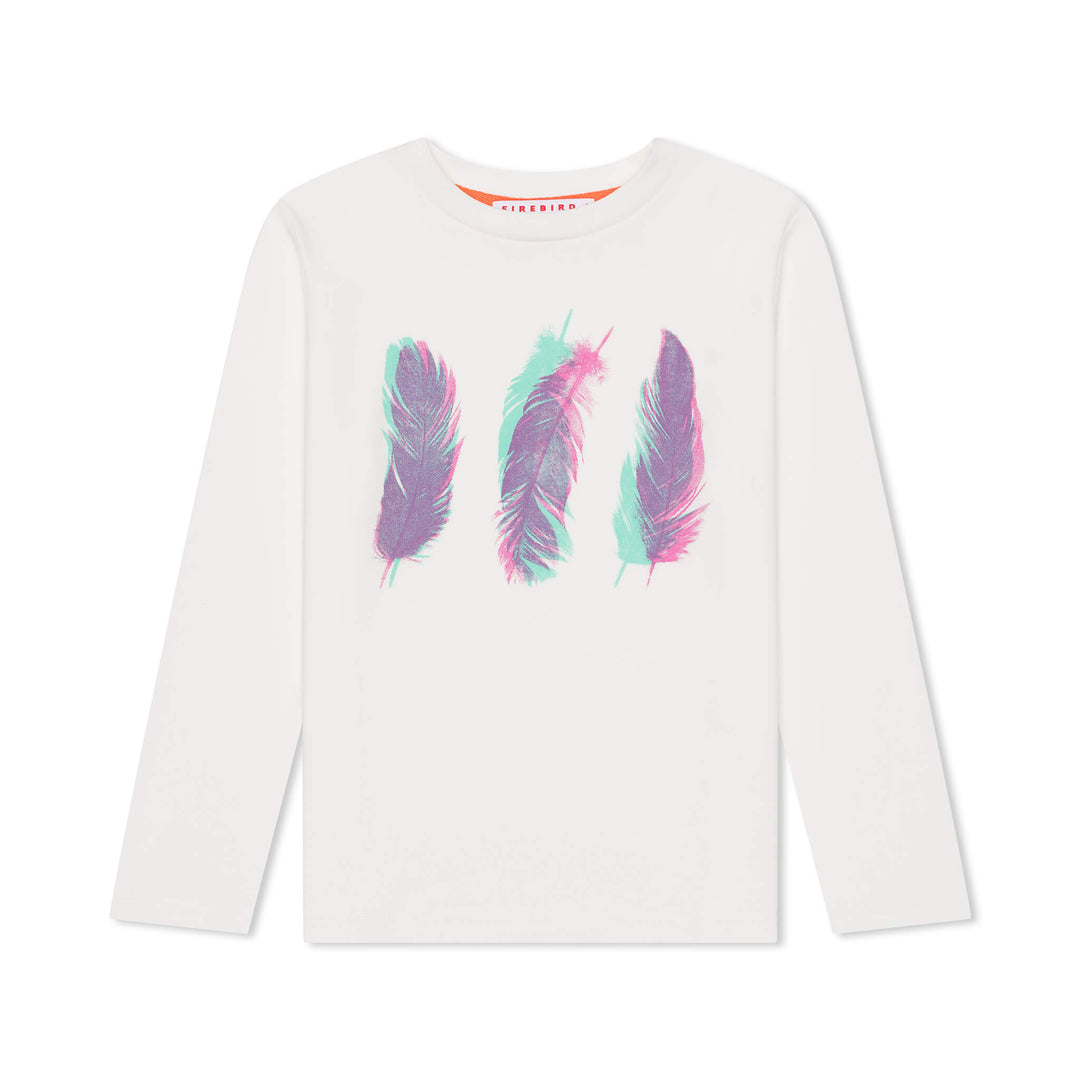
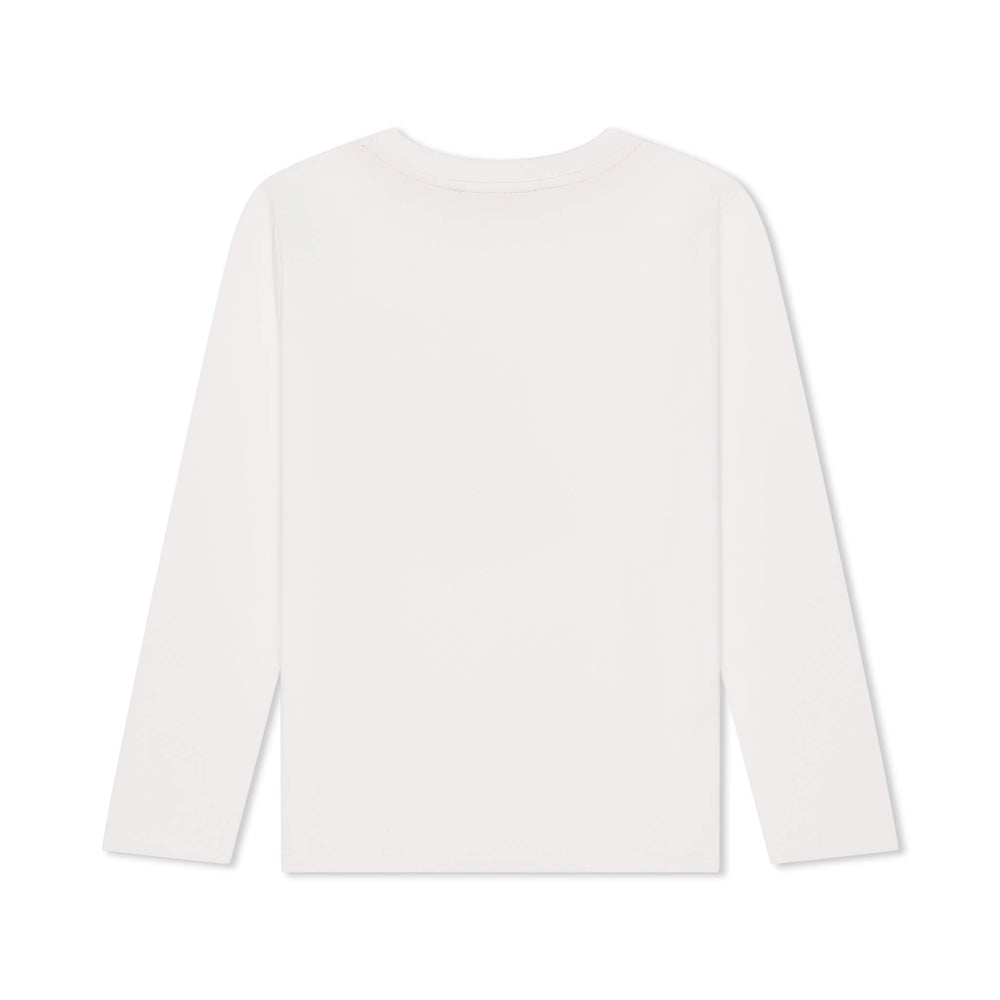
The shirt that bridges seasons. Solo in early fall, under a hoodie when it drops below fifty, solo again in spring. The sleeves stay where they should after washing, which sounds small until you've owned a long sleeve where they don't.
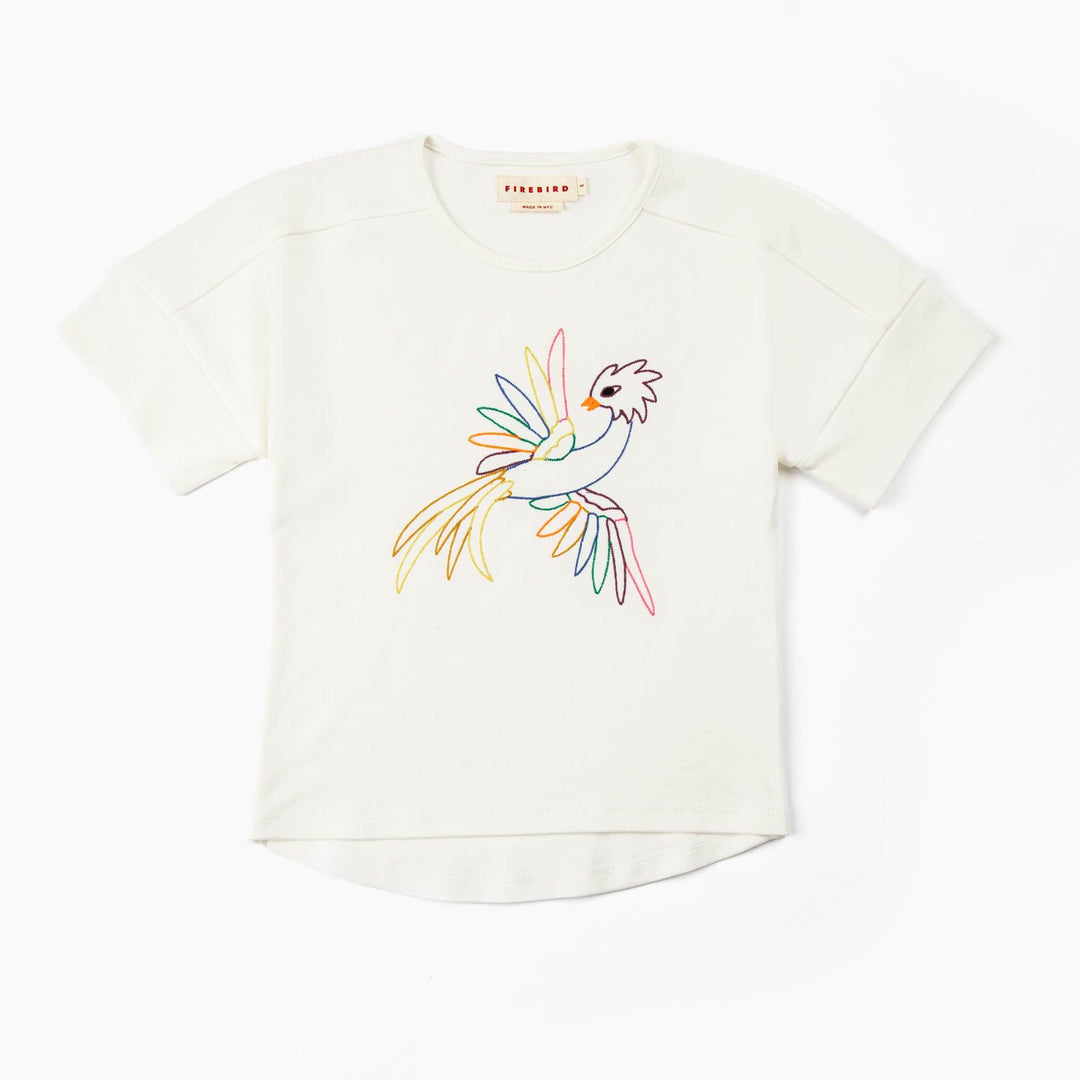
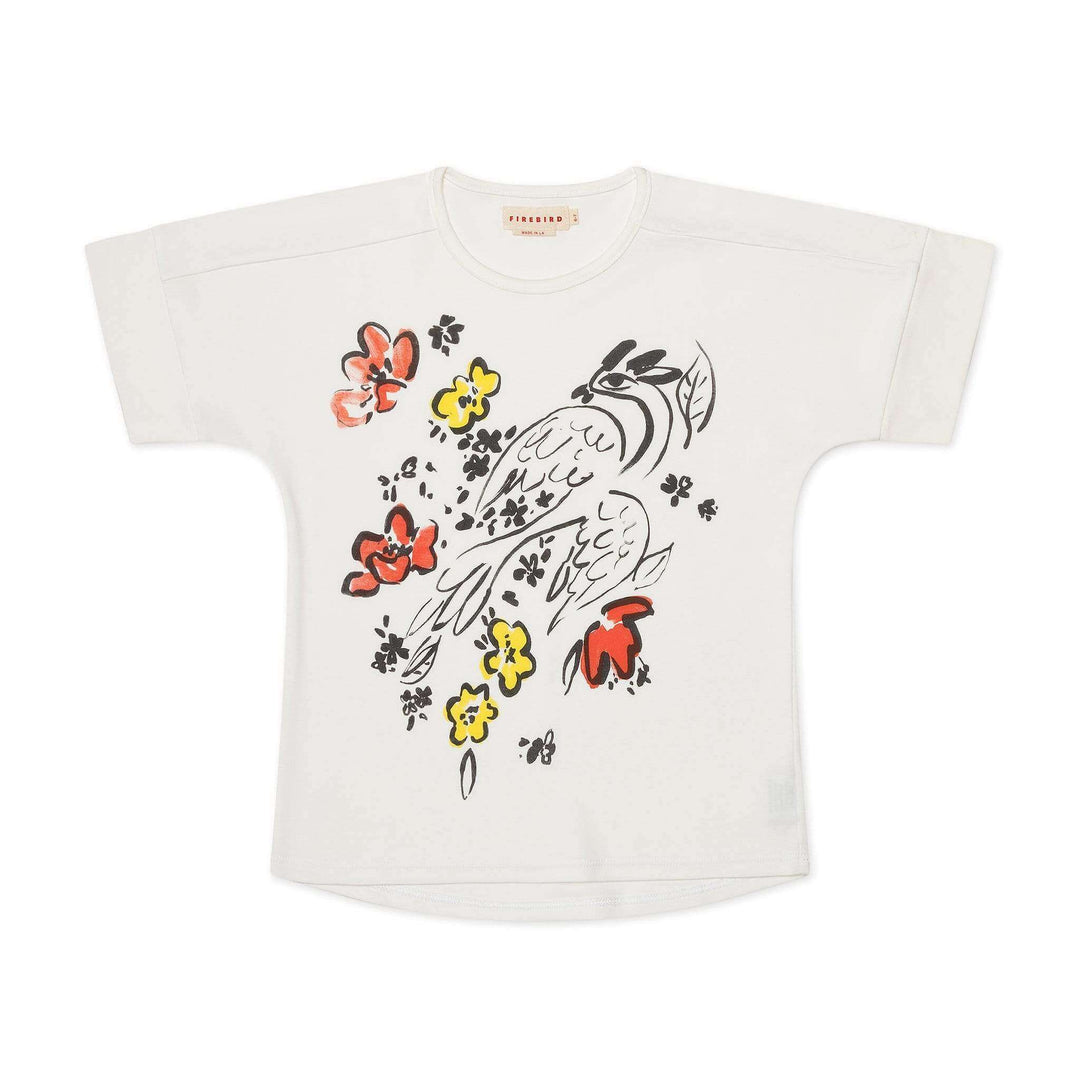
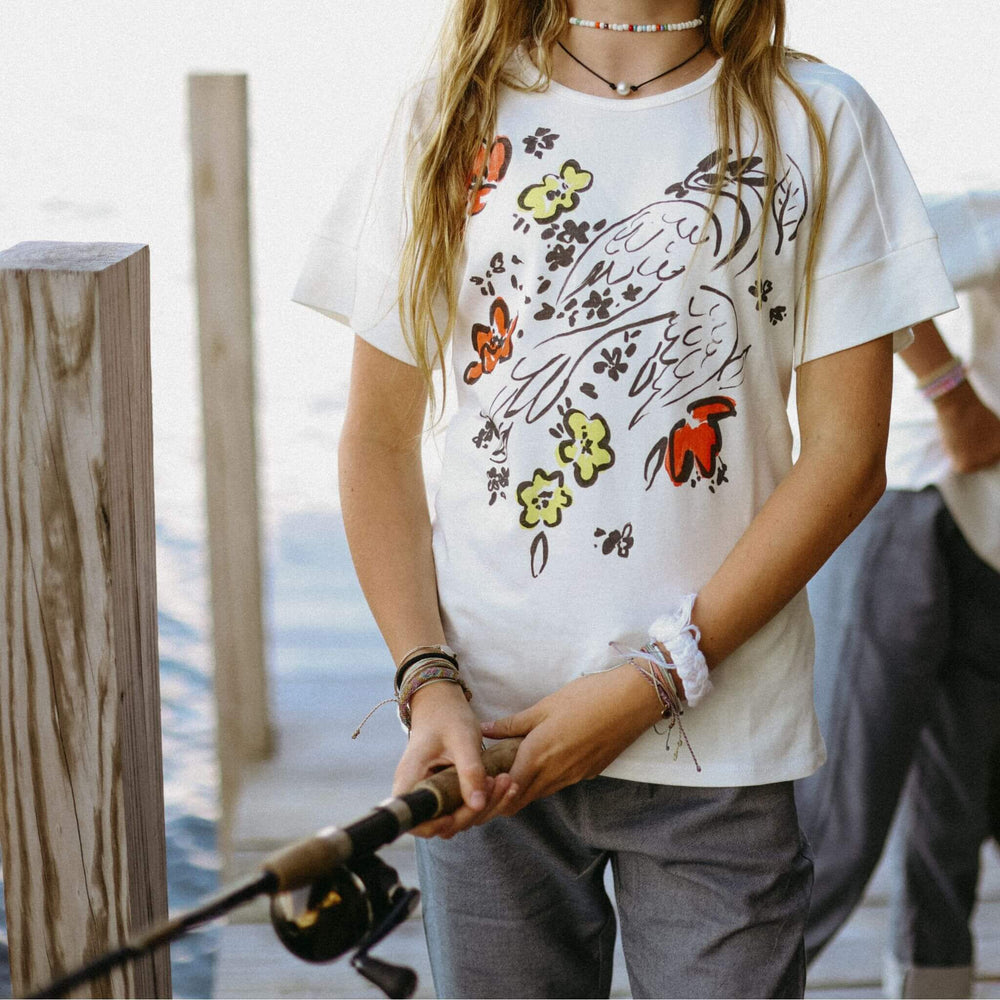
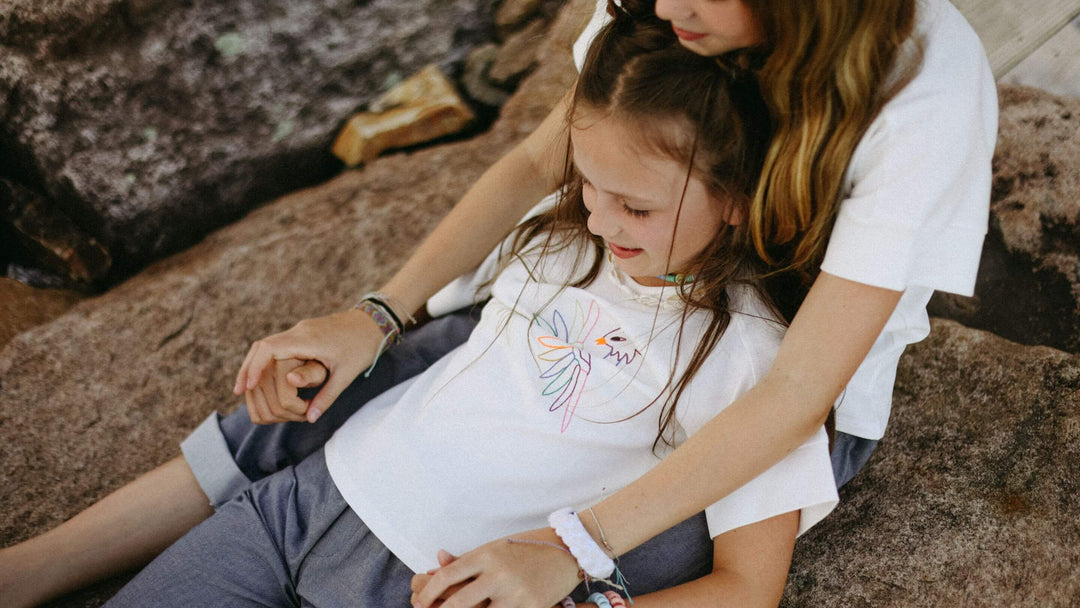
The dressier option in the drawer. We chose embroidery over a printed graphic because stitching ages better, and because it gives a plain white tee enough texture for a birthday party without putting it in "fancy clothes" territory. Washes like any other tee. That's the point.
Pieces That Pair With These Tees
Tees are the start of the outfit, not the whole thing. Our organic cotton pants work as the everyday bottom half. The hoodies and sweatshirts layer cleanly over any of these tees without bulking up the silhouette. For colder months, the cotton-cashmere knits sit nicely over a long-sleeve graphic tee.
FAQs
Are These Tees Soft Enough for Sensitive Skin
Yes. Peruvian Pima is finer and softer than standard cotton, and the whole collection is PFAS-free, with no synthetic coatings or flame retardants. Kids who react to scratchy tags and stiff fabrics tend to do well here.
How Do I Wash Them
Cold water on a gentle cycle, fragrance-free detergent, and either air dry or tumble on low. Spot-clean stains as soon as they happen. The cotton stays soft through repeated washes when treated this way.
Will the Graphics Hold Up
The prints and embroidery are built for regular wear, not for display. Wash inside out if you want to be careful with bold graphics, but most of these tees come back from the laundry looking like themselves.
What Happens When My Child Outgrows It
The Pass It On platform lets you resell outgrown Firebird pieces for credit toward your next order. The tees are designed to be handed down or passed on, which is part of why the cotton weight matters so much in the first place.