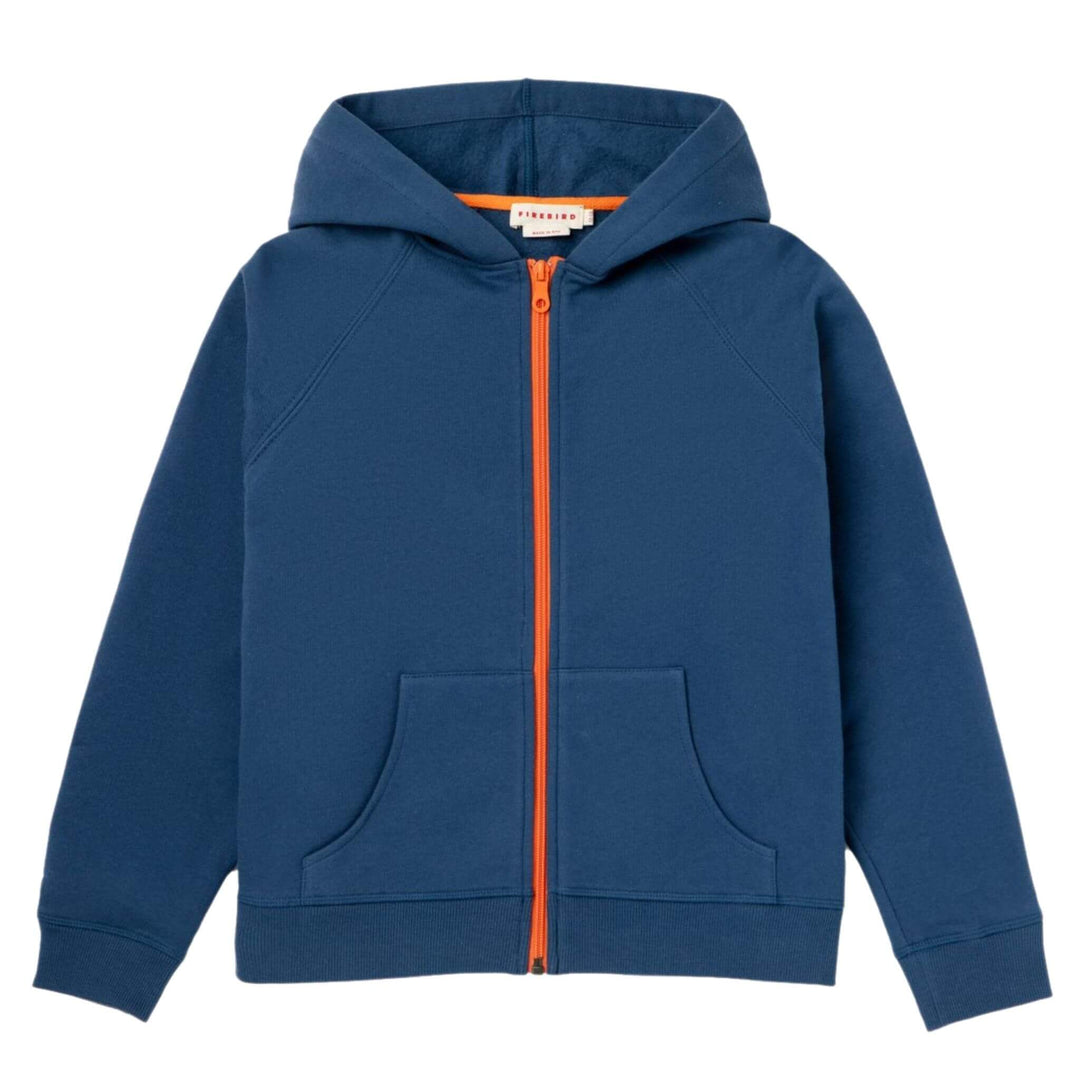
Hoodie vs Sweatshirt: A Parent’s Guide to the Difference
Here’s the short answer: a hoodie is a sweatshirt with a hood attached. “Sweatshirt” is the category. The hood, and usually a front pocket, is what makes one a hoodie. Every hoodie is a sweatshirt, but a sweatshirt with no hood is usually called a crewneck.
That settles the vocabulary. The harder question is which one to buy for your kid, and that comes down to fabric, closure, and how a school day works. This guide walks through both, with the full range of kids sweatshirts as the reference point.

Hoodie vs Sweatshirt: The Core Difference
Is a hoodie a sweatshirt? Yes. A hoodie is a long-sleeved pullover or zip-up sweatshirt with an attached hood. The main difference is the hood. Most hoodies also add a kangaroo pocket across the front, and many adult versions add drawstrings at the hood.
The confusion comes from how stores use the words. In most US shops, “sweatshirt” on a label means a crewneck: round neckline, no hood, clean front. That’s technically imprecise, since a hooded sweatshirt is still a sweatshirt, but it’s the everyday split parents run into.
So yes, you can call a hoodie a sweatshirt and be correct. A zip-up still counts as a hoodie as long as the hood is there. The at-a-glance version:
|
Feature |
Hoodie |
Crewneck Sweatshirt |
|
Hood |
Attached hood |
No hood |
|
Front pocket |
Usually a kangaroo pocket |
Usually none |
|
Closure |
Pullover or zip-up |
Pullover |
|
Neckline |
Hood at the collar |
Round ribbed neckline |
|
Coverage |
Head and neck included |
Body only |
|
Typical use |
Playground, wind, casual wear |
School, layering, casual wear |
Where the Difference Shows Up in a Kid’s Day
For a kid, the differences show up in the day, not the mirror. The useful questions: can they put it on alone, does it work at a desk, and does it come off easily when the classroom heats up?
The hood adds real warmth for the head and neck on a windy playground. It also adds bulk under a winter coat or a car seat harness, and it can catch on climbing equipment. Ribbed cuffs and hem are standard on both styles, so that part is a wash.
The kangaroo pocket is beloved and slightly cursed. Kids fill it with rocks, acorns, and half a granola bar, and a loaded pocket pulls the front of the garment out of shape over time. A crewneck skips the problem entirely.
Closure matters more than most parents expect. A zip-up regulates temperature without a full costume change, which is useful when a kid moves between a cold hallway and a warm classroom six times a day. A pullover stays put and keeps a cleaner line.
Then there’s independence. Most 3-year-olds can manage a pullover crewneck alone. A zipper takes fine motor skills that arrive later, and a hood adds one more thing to wrangle. By age 9, all of it is easy, and the kid’s own preference takes over.
Drawstrings and Kids’ Hoodies: What to Check
If you’ve noticed that kids’ hoodies never have neck drawstrings, that’s by design. Hood and neck drawstrings are prohibited on US children’s upper outerwear in sizes 2T through 12 under an industry safety standard, ASTM F1816, which the CPSC enforces. The rule exists because drawstrings can catch on playground equipment, bus doors, and fences.
Two places drawstrings still show up: secondhand purchases and overseas sellers. Before buying either, check the hood. If there’s a cord at the neck, remove it before the first wear.
One realistic expectation: a hood without a drawstring won’t cinch tight in the wind. It sits looser and can blow back. That’s the trade the standard makes, and it’s the right one.
Sweatshirt Styles You’ll See on Product Pages
Product pages use a handful of recurring labels. What each one means before you compare:
-
Crewneck: Round neckline, no hood, pullover. The classic sweatshirt.
-
Pullover hoodie: Hood, kangaroo pocket, goes on over the head.
-
Zip-up (full-zip) hoodie: Hood plus a zipper down the front.
-
Half-zip or quarter-zip: A zipper that stops at the chest, usually with a standing collar and no hood.
-
Mockneck: A short standing collar, no hood.
-
Raglan vs. set-in sleeve: A raglan seam runs diagonally from collar to underarm, which frees up the shoulder for throwing and climbing. A set-in sleeve looks more tailored, and its shoulder seam is where wear shows first.
The half-zip is the underrated middle option: a crewneck’s clean layering with some ventilation, and no hood bulk. Our mockneck half-zip sweatshirt is that idea in one garment.

We split our own range along these same lines, with separate collections for kids hoodies, zip-up hoodies, and half-zip sweatshirts, which is how most kids’ brands organize the category.
Fabric: What Determines Warmth, Softness, and Lifespan
Most hoodie vs sweatshirt articles stop at the hood. The bigger buying difference is the fabric, because fabric decides warmth, breathability, and how many washes the garment survives.

1) French terry vs. brushed fleece
Flip a sweatshirt inside out. If you see small loops, it's French terry: breathable, midweight, and comfortable across most of the year. Our kids zip-up hoodie in French terry is built for exactly that shoulder-season range.
If the inside feels napped and fuzzy, it’s brushed fleece. The brushing traps air, so fleece runs warmer and softer against the skin, which makes it the cold-weather pick. Our colorblock organic fleece sweatshirt sits on that side of the line, along with the rest of our fleece sweatshirts.
2) Fabric weight
Fabric weight, listed as gsm or oz when a brand discloses it, is the honest predictor of warmth. Lightweight runs roughly under 300 gsm, midweight around 300 to 400, heavyweight above that. This is why a hoodie isn’t automatically warmer than a crewneck: a heavyweight crewneck outperforms a thin hoodie every time.
3) Fiber content
Cotton breathes well, softens with washing, and holds up to high wash frequency, though it can shrink in a hot dryer. Cotton-poly blends shrink less and cost less, but they pill sooner and hold odor longer. Mostly-synthetic fleece is warm and cheap, and it builds static and retains smell through the wash.
Fiber choice is a bigger deal for a kid’s wardrobe. Kids run through sweat cycles from indoor-outdoor play, have more reactive skin, and put a garment through two or three times the washes. If your kid has eczema or reacts to rough fabric, our guide to the best fabrics for sensitive skin goes deeper.
Certification tells you how the fiber was grown and processed. We use GOTS-certified organic cotton across our knits and fleece, which covers the fiber from farm through finishing.
On the label, check four things: fiber content, fabric weight if listed, knit type (French terry or fleece), and any certification.
Choosing Between Them: A Practical Decision Framework
Parents don't decide in the abstract. They decide by scenario, so the comparison below is organized that way.
1) School day
A crewneck or half-zip works at a desk and layers cleanly. Many schools restrict hoods up indoors, and some ban hoodies outright, so check the dress code before stocking up.

2) Playground and outdoor play
The hoodie wins here. Wind protection for the head and neck matters at recess, with the one caveat that hoods can snag on climbing equipment. Our organic cotton graphic hoodie is the piece we’d point to for this slot.
3) Layering under a winter coat
The crewneck wins on bulk. A hood bunches at the back of the neck and competes with the coat’s own hood. Our winter layering guide covers the full system.
4) Car seats and strollers
Bulk affects how a harness fits, and a hood adds bulk exactly where the straps sit. Worth a quick check, no lecture required.
5) Shoulder-season swings
For 50 to 65°F days, the zip-up hoodie is the on-off garment. Zip it in the morning, open it by noon, tie it around the waist by pickup.
6) Sensory preferences
Some kids hate the feel of a hood resting against their neck, or the seam and tag placement at a crewneck collar. By around age 8, the kid has a vote, and a sweatshirt they refuse to wear has a cost-per-wear of infinity.
7) Age bands
For toddlers, prioritize easy on-off and no drawstrings, which is how we build our toddler sweatshirts and toddler hoodies. For big kids, durability and the kid’s own style filter drive the pick.
Fit and Sizing Across a Growth Spurt
In knit tops, kids outgrow length before width. Sleeves creep up the wrist and the hem rides high while the body still fits fine, so sleeve and body length set the usable lifespan.
Sizing up buys time, within limits. One size up means room to grow. Two sizes up means sleeves over the hands, a hem that catches on monkey bars, and a hood that swallows the head. That’s a mobility problem, and on playground equipment a safety one.
The two styles also age differently. A hood’s weight slowly pulls the back neckline out of shape, and a loaded kangaroo pocket stresses its seams. On a crewneck, the failure points are the cuff and hem ribbing losing their snap-back.
That aging difference matters for hand-me-downs and resale. A well-made crewneck often passes to a sibling looking nearly new, while a hoodie shows its miles at the hood seam first. Our piece on how long kids clothes last breaks down the math, which is the same math behind Pass It On, our resale platform.
Care: Keeping Either One Wearable Longer
Wash cold, turn it inside out, and skip high heat in the dryer. High-heat drying is the main cause of shrinkage and pilling in cotton sweatshirts, and it’s the easiest habit to fix.
A few style-specific notes. Hoods hold moisture and dry slower than the body, so give them extra time before folding. Empty the kangaroo pocket before washing, since a forgotten rock does the agitating for the machine.
A stretched cuff can partially recover with a damp reshape and flat dry, and a pilled surface can be shaved back once or twice. Neither reverses fully, so gentle care up front is the better bet.
For the complete routine, our organic cotton care guide and kids clothes cleaning guide cover it in full.
Common Misconceptions About Hoodies and Sweatshirts
-
"A hoodie is always warmer than a crewneck." Fabric weight decides warmth, and a heavyweight crewneck beats a lightweight hoodie every time.
-
"Sweatshirt means gym clothes." The name comes from the original job of absorbing sweat, but construction and fabric now set the register, and a clean mockneck reads polished enough for picture day.
-
"Thicker means better quality." Density, knit quality, and how the ribbing recovers matter more than sheer thickness.
-
"A hoodie and a sweater are the same thing." A sweater is knitted from yarn, while a sweatshirt is cut from knit jersey or fleece. Our kids' sweaters are different garments with different care needs.
-
"Fleece means polyester." Fleece describes the brushed interior finish, and it can be 100% cotton, as ours is.
Which One Belongs in Your Kid’s Rotation
Both, usually. A crewneck or half-zip covers school days and winter layering, and a hoodie covers recess, weekends, and wind. Check the fiber content and the interior knit before you check for a hood.
If you’re building out fall layers now, start with the kids sweatshirts your kid can put on alone, then add the hoodie they’ll reach for on their own. The one they choose is the one that gets worn often enough to justify what it cost.